7 Best UV Flatbed with Roll to Roll Printers in 2026
Choosing the right UV Flatbed with Roll to Roll Printer can reshape a print shop’s daily workflow. It can handle rigid boards, flexible films, banners, wallpaper, and other demanding media. Yet impressive specifications do not always guarantee reliable production.
This guide reviews seven leading options for 2026. The comparison considers print quality, media versatility, curing performance, software control, maintenance access, and total operating cost. Practical details matter. A stable carriage, accurate roll tension, and consistent ink curing can prevent banding across a three-meter banner. Easy nozzle checks can also save valuable production time.
Real-world experience often reveals more than a product brochure. Some machines promise high speed but require slower settings for clean gradients. Others offer excellent color output but create extra maintenance work. That distinction deserves attention. No ranking is universal. Shop size, material mix, operator experience, and service support can change the final choice. The evaluation therefore balances manufacturer data with realistic production needs and recognized safety expectations. It also considers whether suppliers provide training, spare parts, technical documentation, and responsive support after installation.
Small details matter. Really matter. A printer may look powerful in a showroom, yet perform differently during long overnight runs. Readers should verify local warranty terms, ventilation requirements, ink compatibility, and electrical specifications before purchasing. This overview aims to provide a clear, responsible starting point for comparing the best UV flatbed roll-to-roll systems available in 2026.
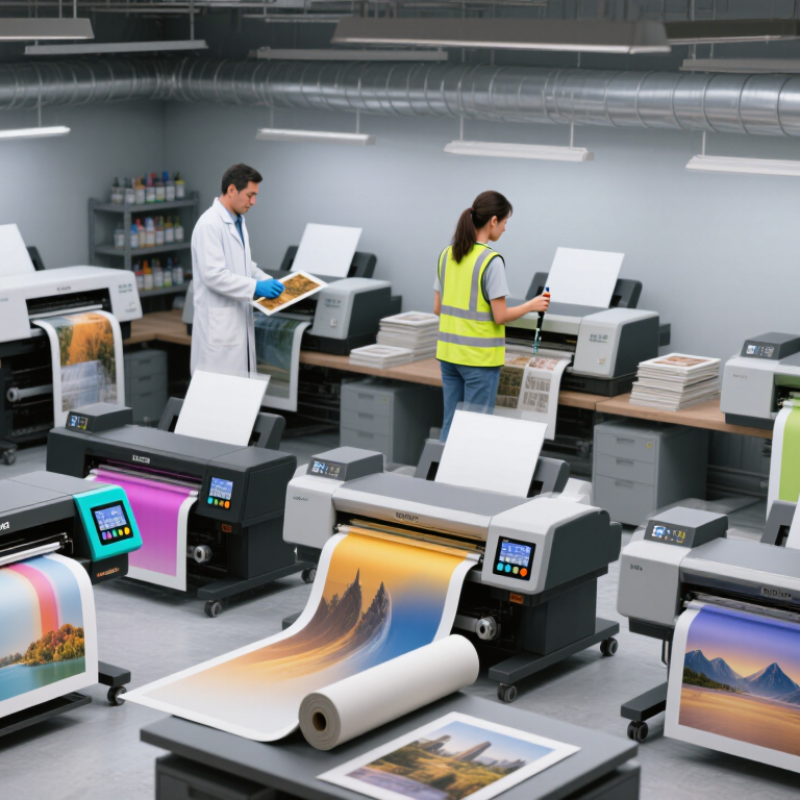
Hybrid UV Printing Explained: Flatbed Boards and Roll-to-Roll Media
Hybrid UV printers combine a rigid vacuum table with a roll-to-roll media path. This design handles boards, films, banners, wallpaper, and flexible sheets on one platform. A flatbed section keeps a 1220 × 2440 millimeter panel stable during printing. Rollers guide continuous media through controlled tension. The workflow feels versatile, but setup errors can become expensive.
Flatbed printing needs accurate board placement, reliable vacuum pressure, and a suitable head height. Dust under a panel can create visible gaps or blurred edges. Roll-to-roll printing requires careful media alignment and steady take-up tension. Operators should check the core size, media curl, and curing response before a full run. I usually test a small strip first. It saves material.
Ink adhesion also depends on surface treatment and curing energy. Some plastics need cleaning or priming, while coated paper may react differently. A useful machine should provide adjustable vacuum zones, tension controls, head-height settings, and repeatable calibration. Print profiles matter as much as hardware. Even experienced operators can miss banding when viewing samples indoors. I still inspect gradients under angled light. That extra check reveals uneven curing and subtle color shifts. A hybrid model may promise speed, yet real productivity depends on changeover time, maintenance access, and operator training.
Core Specifications: Resolution (dpi), Drop Size (pL), Width (m), and Speed (m²/h)
When comparing seven UV flatbed printers with roll-to-roll capability, read resolution, drop size, working width, and speed as a connected set. Resolution, measured in dpi, indicates how finely a printer can place detail, but the highest figure alone does not guarantee a sharper finished sign. Drop size, measured in picoliters, affects how smoothly small text, gradients, and solid colors appear. Smaller drops can help with fine detail; larger drops may build coverage faster. Check sample prints under normal viewing conditions. Numbers can mislead.
Width and media handling Width, measured in meters, determines whether the machine can handle your usual rigid panels and flexible media without awkward trimming. Confirm the usable print area, not just the advertised maximum.
Speed and production settings Speed in square meters per hour needs similar care: production settings may trade detail for output, while high-quality settings can run much slower.
Ask for figures at comparable print modes and include loading, curing, and changeover time in your estimate. Test your own artwork and material. A glossy roll and a textured board may behave differently, even on the same machine.
These specifications narrow the field, but they do not replace a practical test. I would also record cleaning time and color consistency; those details are easy to overlook, and sometimes the published data leaves questions unanswered.
UV-LED Curing at 385/395 nm: Ink Adhesion and Substrate Compatibility
UV-LED Curing at 385/395 nm: Ink Adhesion and Substrate Compatibility
In flatbed and roll-to-roll printing, wavelength is not a minor setting. A 385 nm or 395 nm LED source must match the ink’s photoinitiator response; otherwise, the surface may feel dry while deeper ink remains under-cured. That can weaken adhesion on rigid boards, films, and flexible banners. The Grand View Research UV-cured printing market report estimated the global market at about USD 4.43 billion in 2023, reflecting growing use of UV-curable processes. Market growth does not guarantee reliable output, though. Substrate testing still matters.
Tips: Print a small swatch first. Check adhesion after curing, not only by touch. Compare results on coated and uncoated areas, and record lamp distance, speed, and exposure settings. On plastic films, clean handling is essential; fingerprints can create uneven bonding. If ink chips when scored or lifted with tape, review the substrate preparation and curing dose before changing the whole job setup.
A useful production check is to inspect both the printed face and the reverse side where practical. Look for tack, cracking, and color transfer after the sample cools. Some materials behave unpredictably, even within the same substrate family. That is inconvenient, but real. A slower carriage speed may improve cure, yet excessive heat can distort thin media. Keep a simple test log for each material and revisit it when ink or lamp settings change.
7 Best UV Flatbed with Roll to Roll Printers in 2026
UV-LED Curing at 385/395 nm: Ink Adhesion and Substrate Compatibility
The chart presents a generalized adhesion-suitability index from 1 to 5 for common flatbed and roll-to-roll substrates under 385 nm and 395 nm UV-LED curing. Higher values indicate stronger typical compatibility when the surface is clean and properly prepared. Actual results vary with ink formulation, surface energy, coating, lamp intensity, print speed, and pretreatment; production testing is recommended.
Seven Best 2026 Printers Compared by Bed Size, Roll Width, and Throughput
A 2026 UV flatbed with roll-to-roll printer should be judged by three numbers: bed size, maximum roll width, and verified production speed.
Grand View Research valued the global digital printing market at USD 34.3 billion in 2023 and forecast 6.2% annual growth through 2030. That market-level trend supports wider demand, but it does not prove that a particular machine will meet a shop’s deadlines.
Compare usable print area, not just the outer bed dimensions. A 2.5-by-1.3-meter bed, for example, may suit rigid panels, while a wider roll path can reduce material changes on long banner runs.
Small details matter.
Throughput figures need careful reading. A quoted maximum speed may use a draft mode, fewer passes, or a narrow printhead configuration. Ask for a timed sample using the intended material, resolution, and color settings.
FESPA’s Global Print Census has documented the continuing importance of wide-format work among print providers; however, broad industry surveys cannot replace a site-specific production test. For the seven printers being compared, record both peak speed and saleable output per hour, then note the bed-to-roll changeover time.
That last figure is often missing. It can quietly erase the advantage of a faster machine. Check whether roll width includes the margins needed for loading, and whether the bed supports the heaviest panels you actually handle.
Thin acrylic can flex. Rigid board can shift. A spreadsheet helps, but a real test run catches the awkward bits.