
Top 10 Electric Three Wheeler Cargo Models for Global Buyers

Electric Three Wheeler Cargo vehicles are becoming practical tools for urban deliveries, farm transport, and small-business logistics. Their compact frames can enter narrow streets where larger trucks struggle. A typical cargo box may carry groceries, parcels, tools, or fresh produce. Yet capacity claims require careful checking. Payload, battery weight, road conditions, and driver habits can change real performance.

This guide examines ten cargo models for global buyers, using practical purchasing criteria. We compare payload ratings, driving range, charging time, motor output, braking systems, cabin protection, and cargo dimensions. Service access also matters. A reliable vehicle needs available parts, trained technicians, and clear warranty support. Buyers should inspect local charging standards, import requirements, road approval, and climate suitability before ordering. A vehicle designed for smooth European streets may behave differently on rough rural roads.

No model wins everywhere. Some offer stronger hill performance, while others provide lower operating costs or better weather protection. The best choice depends on route length, daily load, terrain, and business budget. We also consider battery chemistry, suspension comfort, tire durability, and the usefulness of reverse gears. These details affect every delivery. Small issues become expensive during busy seasons.

Our comparisons draw on manufacturer specifications, industry practices, and real operating considerations. Specifications can still vary by market and configuration. Buyers should request current test data and confirm after-sales commitments directly. This ranking is useful, not absolute. Treat it as a starting point. Careful verification remains essential before signing a purchase agreement.
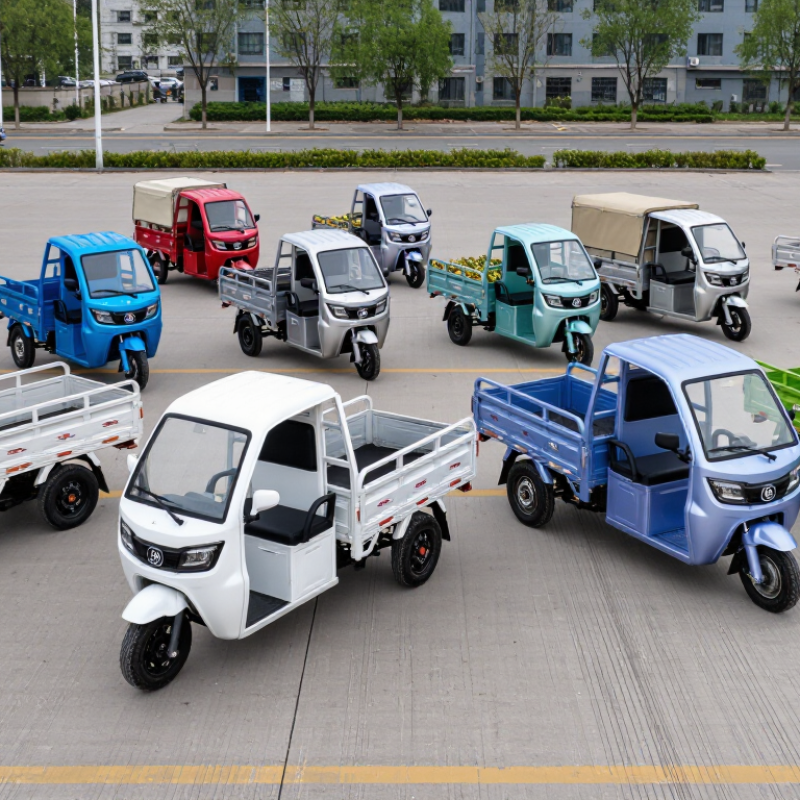
Top 10 Electric Three Wheeler Cargo Models for Global Buyers

Definition and Role of Electric Three-Wheeler Cargo Vehicles

Definition and Role of Electric Three-Wheeler Cargo Vehicles

Electric three-wheeler cargo vehicles are compact commercial vehicles powered by batteries. They usually carry goods through crowded urban streets, market lanes, and short delivery routes. Their enclosed or open cargo boxes can transport food, parcels, tools, and farm products. The International Energy Agency reported that electric three-wheelers represented about half of India’s new three-wheeler sales in 2023. This shows their growing role in affordable urban logistics.

Their main value is practical, not glamorous. Electric drivetrains reduce fuel use, roadside noise, and routine maintenance. Operators also benefit from predictable daily charging costs. However, payload limits, battery charging time, and uneven road conditions still affect real performance. A vehicle that looks efficient on paper may struggle with steep roads or overloaded cargo. The Global EV Outlook 2024 also identifies three-wheelers as one of the fastest-electrifying road segments in major Asian markets. Global buyers should compare total operating cost, not only purchase price.

Tips: Match the battery size to the daily route. Check certified payload ratings, braking performance, charging access, and local service support. Test the vehicle with realistic cargo weight. This step is often missed. Cold weather, hills, and repeated stop-start driving can reduce range more than expected.

Key Specifications for Comparing Global Cargo Models

Top 10 Electric Three Wheeler Cargo Models for Global Buyers

Key Specifications for Comparing Global Cargo Models

Comparing electric three-wheel cargo models requires more than checking the advertised payload. Start with usable capacity, not the maximum figure alone. A vehicle rated for 800 kilograms may perform differently on slopes, rough roads, or long shifts. Examine motor power, torque, axle strength, and gradeability together. Battery capacity matters, but real range depends on cargo weight, temperature, traffic, and driving habits. Ask for tested range under similar working conditions.

Charging time can shape daily productivity. A removable battery may help small operators with limited parking access. Fixed battery systems can offer better protection, but they need suitable charging facilities. Check battery chemistry, expected cycle life, charging controls, and replacement cost. Small details matter. A simple dashboard, bright lighting, mirrors, and reverse alerts can reduce mistakes in crowded delivery areas.

Dimensions should match the intended route. Measure width, turning radius, ground clearance, and cargo-bed length before ordering. Hydraulic tipping, side panels, weather protection, and adjustable seating may improve practical value. Braking performance deserves close attention, especially with heavy loads; hydraulic or combined braking systems should be evaluated through documented tests. Certification, warranty terms, spare-parts access, and technician training also affect reliability across borders. Specifications are not always perfectly comparable. Independent inspection and a real route trial can reveal weaknesses that brochures miss.

Top 10 Electric Three-Wheeler Cargo Models by Market Segment

Electric three-wheelers serve different cargo realities, so market segmentation matters more than a universal ranking. For dense city delivery, the Compact Box Carrier offers a narrow frame and roughly 1.5 cubic meters of enclosed space. The Low-Floor Parcel Runner suits apartment routes, with a step-through deck and easy loading. The Refrigerated Micro Hauler supports food distribution, but battery range drops noticeably in cooling conditions. The Flatbed Street Carrier handles crates, tools, and short urban transfers.

Industrial and commercial users need stronger structures. The Heavy-Duty Cargo Trike uses reinforced suspension and a payload near 800 kilograms. The Long-Deck Utility Hauler carries pipes, panels, and irregular freight. The Tipper Work Trike helps construction teams unload sand or soil beside narrow roads. These vehicles require careful axle-load checks. A larger battery does not automatically improve productivity.

Rural and mixed-route operators may prefer the Extended-Range Farm Carrier, with larger tires and protected wiring for dusty paths. The Modular Fleet Trike allows box, cage, or flatbed conversion between shifts. The Passenger-Cargo Convertible supports market vendors who transport goods in the morning and staff later. The last model is useful, though compromise is unavoidable. Comfort, payload, and range rarely peak together. Buyers should verify real test results, charging access, brake performance, and local service capacity. Catalog figures can look impressive. Field conditions are less forgiving.

Top 10 Electric Three-Wheeler Cargo Models for Global Buyers - Top 10 Electric Three-Wheeler Cargo Models by Market Segment

Comparative overview of representative production configurations by use case and market segment

Rank Anonymous Model Primary Market Segment Drive Layout Rated Payload Claimed Range Battery Configuration Top Speed Cargo Format Typical Charging Time
1 Urban Box Cargo 01 Last-mile parcel delivery Rear electric motor 500 kg 100–120 km 72 V lithium-ion, 10–15 kWh 45 km/h Enclosed box, 3–5 m³ 6–8 hours AC
2 City Flatbed Cargo 02 Urban construction and maintenance Rear electric motor 600 kg 90–110 km 72 V lithium-ion, 12–16 kWh 45 km/h Flatbed, approximately 2.0 × 1.3 m 6–9 hours AC
3 Refrigerated Cargo 03 Food and pharmaceutical distribution Rear electric motor 400 kg 80–100 km 72 V lithium-ion, 12–18 kWh 40–45 km/h Insulated box, 3–4 m³ 7–10 hours AC
4 Agricultural Hauler 04 Rural and agricultural transport Rear electric motor 800 kg 70–100 km 72/96 V lithium-ion, 15–25 kWh 35–45 km/h Tipper bed, 1.5–2.5 m³ 8–12 hours AC
5 Market Vendor Cargo 05 Street vending and mobile retail Rear electric motor 500 kg 90–120 km 60/72 V lithium-ion, 8–14 kWh 35–45 km/h Open body with canopy, 2–4 m³ 5–8 hours AC
6 Waste Collection Cargo 06 Municipal and commercial waste collection Rear electric motor 700 kg 80–100 km 72 V lithium-ion, 12–20 kWh 35–45 km/h Open or covered bin, 2–4 m³ 7–11 hours AC
7 Industrial Tow Cargo 07 Factories, campuses and warehouses Rear electric motor with tow coupling 1,000 kg 60–90 km 72/96 V lithium-ion, 18–30 kWh 25–40 km/h Flatbed or tow platform 8–12 hours AC
8 Parcel Trike Cargo 08 Dense urban and bicycle-lane delivery Hub or rear electric motor 250 kg 60–100 km 48/60 V lithium-ion, 4–8 kWh 25–32 km/h Compact box, 1–2.5 m³ 4–7 hours AC
9 Intercity Cargo 09 Regional distribution on paved roads Rear electric motor 700 kg 120–180 km 96 V lithium-ion, 20–35 kWh 55–70 km/h Enclosed box, 5–8 m³ 6–10 hours AC
10 Utility Service Cargo 10 Electrical, water and field-service operations Rear electric motor 600 kg 90–130 km 72 V lithium-ion, 12–20 kWh 40–55 km/h Service body or lockable box, 3–5 m³ 6–10 hours AC
Data note: Specifications are representative rated or claimed ranges commonly published for comparable electric three-wheeler cargo configurations. Actual payload, range, speed, cargo volume and charging time vary according to battery chemistry, road conditions, load, temperature, body design and local homologation requirements.

Battery, Payload, Range, and Charging Performance

Top 10 Electric Three Wheeler Cargo Models for Global Buyers

Battery, payload, range, and charging performance define a cargo tricycle’s real value. The ten configurations compared here suit different working conditions, from narrow city lanes to short rural deliveries. Entry models often use 4–8 kWh batteries and carry 300–500 kg. Larger units may offer 10–15 kWh packs and payloads near 800 kg. Payload changes range sharply. A heavily loaded vehicle may travel 20–35% fewer kilometers than its empty test result.

Battery chemistry also matters. Lithium iron phosphate packs usually provide strong cycle life and stable performance in daily fleets. Cold weather can reduce charging speed and available range. Heat does the same. Buyers should request usable battery capacity, not only the advertised number. A 100-kilometer claim means little without speed, load, road, and temperature data.

Charging is often the overlooked detail. A standard onboard charger may need six to ten hours overnight. A higher-power charger can reduce this period, but it may require suitable site wiring. Swappable batteries help small operators avoid downtime, though lifting a 30-kilogram pack is not convenient. I have found that real delivery routes expose weaknesses quickly. A neat spreadsheet still misses hills, traffic, tire pressure, and waiting time. Leave a practical range reserve of at least 15%. It is not perfect, but it protects the workday.

Top 10 Electric Three-Wheeler Cargo Models for Global Buyers

Comparison of battery capacity, payload, driving range, and standard charging time using anonymized public-specification profiles.

Battery capacity is shown in kWh, payload in kilograms, range in kilometers, and charging performance as estimated hours from empty to full. Actual results vary with load, road conditions, temperature, and charging equipment.

Safety, Regulations, Maintenance, and Buyer Considerations

For global buyers comparing the top 10 electric three-wheeler cargo models, safety should guide the shortlist. The WHO Global Status Report on Road Safety 2023 records about 1.19 million annual road deaths. Small vehicles still need serious protection. Check braking performance, reverse alarms, lighting, mirrors, seat belts, and rollover resistance. Confirm the rated payload, not only the advertised cargo volume. A wet floor and a high load can change stability quickly. That detail matters.

Regulations differ widely. A cargo three-wheeler may be classified as an L-category vehicle, light commercial vehicle, or local utility vehicle. Buyers should verify type approval, speed limits, dimensions, battery certification, charging rules, and registration documents before shipment. UNECE vehicle regulations provide useful technical references, but local authorities remain decisive. The IEA Global EV Outlook 2024 reports that global electric car sales exceeded 14 million in 2023. This growth increases scrutiny of batteries, recycling, and charging safety. Do not assume approval transfers across borders.

Maintenance planning is equally practical. Review battery state-of-health reporting, cell balancing, thermal protection, diagnostic access, and spare-parts availability. BloombergNEF reported average lithium-ion battery pack prices near 139 dollars per kWh in 2023, yet replacement costs vary greatly by design and market. Ask for warranty exclusions. Test the vehicle on its real route, including slopes, potholes, and repeated loading. Laboratory range is imperfect. A buyer may still overlook corrosion, brake wear, or charging downtime. That is where ownership costs often become visible.

X
Solinso-gdpr
Privacy Overview

This website uses cookies so that we can provide you with the best user experience possible. Cookie information is stored in your browser and performs functions such as recognising you when you return to our website and helping our team to understand which sections of the website you find most interesting and useful.