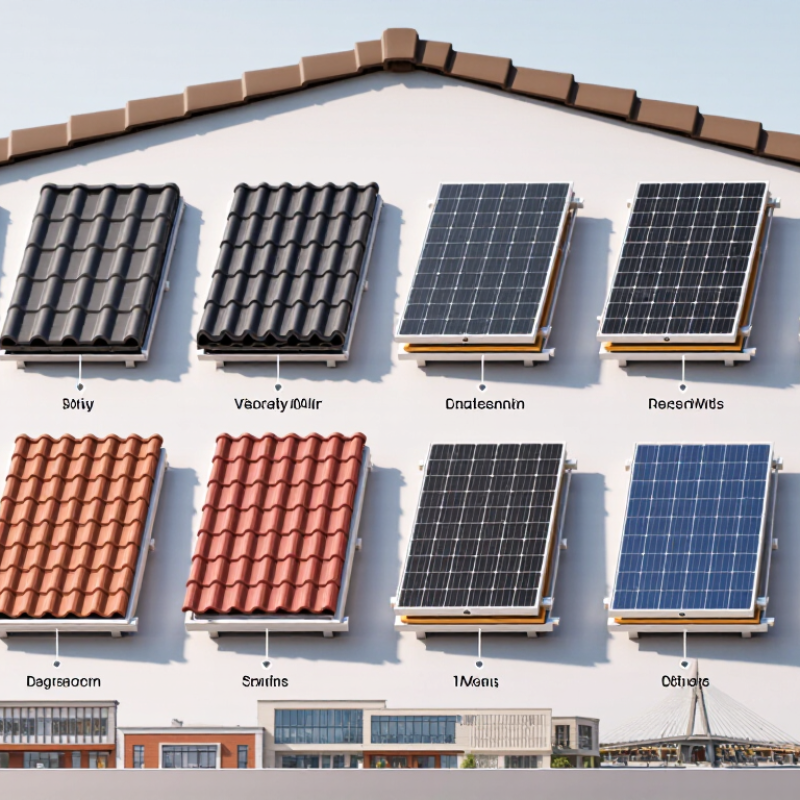
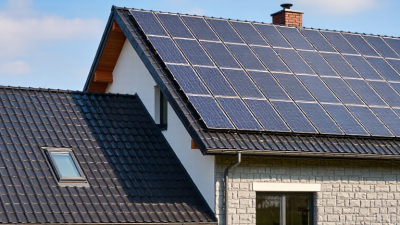
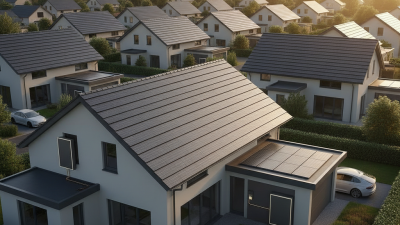
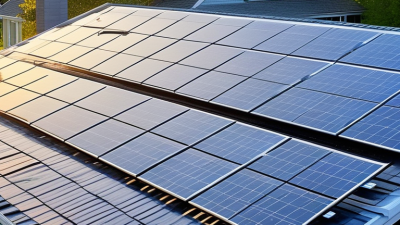
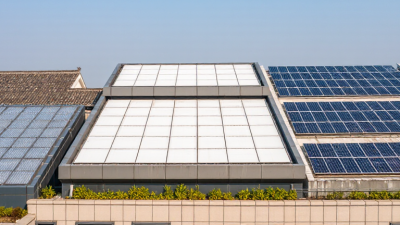
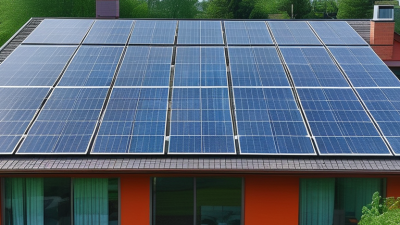
China has become a major sourcing market for solar roof tiles, serving residential, commercial, and architectural projects worldwide. This guide introduces ten Chinese suppliers that attract attention from global buyers. Their products may combine photovoltaic cells, weather protection, and roof integration in one visible surface.
The selection considers manufacturing experience, product range, technical documentation, and export communication. It also examines conversion efficiency, fire performance, waterproofing design, temperature tolerance, and expected service life. Buyers should request current datasheets, test reports, sample panels, installation manuals, and warranty terms before making decisions. A factory video is useful, but an independent audit can reveal more. Details matter.
These suppliers are not ranked by price alone. A lower quotation may exclude inverters, mounting accessories, packaging, or technical support. Some companies appear strong online but provide limited project evidence. That deserves caution. Product availability and certifications can also change over time. This list should support careful comparison, not replace professional engineering review. Roof structure, climate, local grid requirements, and installer capability all influence the final choice. Even attractive solar roof tiles may perform poorly when ventilation, drainage, or electrical compatibility receives little attention. Global buyers should evaluate communication speed, quality consistency, after-sales support, and realistic delivery schedules. The best supplier is rarely the cheapest one. It is the partner that can document performance and respond responsibly when problems appear.
Solar roof tiles are photovoltaic building materials designed to replace, or integrate with, conventional roofing. They generate electricity while forming a weather-resistant roof surface. Unlike standard solar panels, they can create a more uniform appearance, especially on villas, heritage-style homes, and small commercial buildings.
The market is expanding quickly. IRENA reported 1,419 GW of cumulative solar power capacity worldwide at the end of 2023. The IEA PVPS Trends 2024 report also recorded more than 400 GW of new photovoltaic installations during 2023. This growth increases interest in building-integrated solutions. Chinese suppliers are attractive because they operate within a mature manufacturing ecosystem. Strong supply chains support glass processing, solar cells, inverters, aluminum frames, and testing services. Buyers may also find flexible project quantities and competitive production costs.
But lower pricing is not enough. A roof tile must withstand hail, wind, moisture, heat, and repeated temperature changes. Ask for IEC testing, fire ratings, wind-load data, installation manuals, and traceable warranty terms. Check the roof angle and shading before ordering. A beautiful tile produces little energy under a chimney’s shadow. The category is not flawless. Some products have lower efficiency than conventional panels, and repairs can be less convenient. An experienced supplier should admit these limitations and provide measured performance data, not only attractive renderings.
Selecting China’s top 10 solar roof tile suppliers requires more than comparing catalog prices. Global PV demand reached about 456 GW of new capacity in 2023, according to the IEA PVPS Trends 2024 report. This growth increases interest in building-integrated products, but roof tiles face stricter demands than standard modules. Our selection examines production capacity, export experience, installation evidence, and after-sales responsiveness. Factory visits, sample reviews, and project references matter.
Technical compliance carries greater weight than marketing language. Suppliers are assessed against relevant IEC 61215 and IEC 61730 requirements, while fire, wind-load, waterproofing, and hail performance are reviewed for the target market. IEA PVPS Task 15 reports highlight the importance of integrating photovoltaic systems with building design, structure, and local regulations. Therefore, we check tile dimensions, mounting details, cable routing, replacement procedures, and compatibility with common roofing systems.
The evaluation also considers warranty clarity, third-party test reports, quality-control records, and production traceability. A supplier with impressive output may still lack consistent color matching or reliable corner sealing. Small defects become visible on a roof. Pricing is compared using delivered cost, not factory quotation alone. Currency, packaging, spare tiles, certification, and technical support can change the final figure. No ranking is perfect. Factory claims need independent verification, and local installers should test samples before large orders.
How the Top 10 Chinese Solar Roof Tile Suppliers Are Selected
The suppliers are evaluated using a transparent 100-point framework. Product safety and reliability receive the highest weighting, followed by manufacturing capability, export readiness, project experience, and customer support. The percentages represent evaluation weights rather than company-specific results or market share.
China’s leading solar roof tile suppliers serve different project needs. Supplier A focuses on ceramic-style tiles for villas and heritage-inspired homes. Supplier B develops lightweight polymer-backed modules for older roofs. Supplier C offers integrated flashing and mounting parts, reducing installation delays. Supplier D specializes in high-efficiency tiles for limited roof space. Its factory records include cell testing, lamination checks, and visual inspection.
Supplier E supports large housing projects with automated production and stable batch output. Supplier F provides flexible color matching for architects, although custom finishes may extend delivery times. Supplier G is experienced in cold climates and tests products through freeze-thaw cycles. Supplier H emphasizes fire resistance, wind-load data, and documented material certificates. These details matter more than attractive catalog images.
Supplier I supplies compact tiles for small rooftops and renovation work. Supplier J combines roof surveys, layout drawings, and installer training for overseas buyers. Its service appears practical, but response quality should be verified during a live project.
Every supplier should provide power data, warranty conditions, packaging photographs, and traceable test reports.
Ask for samples before signing a large order.
Factory visits can reveal uneven color, weak connectors, or rushed packing. Some profiles look impressive on paper. Real performance still depends on installation skill, roof structure, climate, and after-sales support.
Suppliers may also revise specifications without clear communication, so buyers should record every approved detail in writing.
When comparing China’s top 10 solar roof tile suppliers, buyers should inspect more than price and appearance. IEA PVPS Trends 2024 reported roughly 450 GW of new photovoltaic capacity worldwide in 2023. That scale increases demand for reliable building-integrated products.
Check cell efficiency, temperature coefficient, power tolerance, and degradation warranty. Fraunhofer ISE’s Photovoltaics Report 2024 places mainstream commercial module efficiency near 20% to 23%. Roof tiles may perform lower because of shape, ventilation, and limited active area. Small details matter. Ask for independent flash-test data, thermal cycling results, and measured output under partial shade. Some suppliers present laboratory results too confidently. Real roofs are less cooperative.
Certification should match the installation market. IEC 61215 supports design qualification, while IEC 61730 addresses module safety. IEC 61701 helps evaluate salt-mist resistance, and IEC 62716 covers ammonia exposure. Buyers should also request fire classification, wind-load testing, hail testing, waterproofing details, and electrical documentation for the complete roof system. ISO 9001 indicates quality-management processes, but it does not prove long-term tile durability. Certification scope matters. A certificate for the cell may not cover the finished roof tile. I would verify factory audit records, traceability codes, inverter compatibility, and replacement procedures before signing a contract. That step is often skipped.
| Supplier Profile | Primary Roof-Tile Format | Cell / Module Technology | Typical Rated Power | Typical Efficiency | Key Construction Features | Electrical & Mechanical Parameters | Relevant Standards / Certifications to Request | Typical Warranty Position | Best-Fit Buyer Requirement |
|---|---|---|---|---|---|---|---|---|---|
| Supplier Profile 01 | Glass-glass interlocking roof tile | Monocrystalline PERCHalf-cell layout | Approximately 30–55 W per tile | Approximately 18%–21% | Tempered front glass, concealed wiring, overlapping edge design, low-profile appearance | System voltage commonly up to 1,000 or 1,500 V DC; IP65/IP68 junction-box options; positive and negative power tolerances should be confirmed | IEC 61215; IEC 61730; IEC 62930 cable where applicable; ISO 9001 manufacturing system; regional fire and building approvals | Commonly 10–15 years for product quality and 25–30 years for linear power output; confirm exact terms | Residential replacement roofs requiring a conventional tile appearance and moderate project cost |
| Supplier Profile 02 | Large-format integrated solar roof panel | N-type TOPConGlass-glass module | Approximately 100–180 W per panel | Approximately 20%–23% | Higher active-area coverage, reinforced glass, drainage channels, hidden mounting hardware | Lower temperature coefficient than conventional PERC is commonly claimed; verify measured coefficient, load rating, and connector compatibility | IEC 61215; IEC 61730; IEC 63092-1/-2 for BIPV applications where applicable; ISO 9001; salt-mist and ammonia testing if required | Usually 12–15 years product warranty and up to 30 years performance warranty, subject to model-specific documentation | New-build projects prioritizing energy yield, rapid installation, and a flush roof surface |
| Supplier Profile 03 | Solar slate-style tile | Monocrystalline PERCShingled or tiled cells | Approximately 35–70 W per tile | Approximately 18%–22% | Dark textured finish, narrow visible seams, non-penetrating or concealed fixing options | Bypass-diode configuration should be checked for partial-shading performance; typical module operating voltage depends on tile string design | IEC 61215; IEC 61730; EN 50583-1 for building-integrated PV claims; CE documentation for applicable markets; fire classification test reports | Product and power warranties vary by tile model; obtain a transferable warranty and installation exclusions in writing | Heritage-style homes, villas, and developments where visual integration is more important than maximum wattage per unit |
| Supplier Profile 04 | Curved or flexible solar roof tile | Thin-film or lightweight crystallineFlexible substrate options | Approximately 20–80 W per tile or strip | Approximately 12%–20% | Low weight, adaptable form factor, suitable for selected curved or lightweight roof structures | Confirm minimum bending radius, maximum installation temperature, UV resistance, cable routing, and wind-uplift performance | IEC 61215 and IEC 61730 for applicable module construction; IEC 61646 may apply to certain thin-film designs; ISO 9001; roof-system fire and weather testing | Warranty length is highly design-dependent; request accelerated-aging, delamination, and moisture-ingress evidence | Lightweight roofs, curved surfaces, temporary structures, and projects with strict loading limitations |
| Supplier Profile 05 | Terracotta-look photovoltaic tile | Monocrystalline siliconColored glass or coating | Approximately 25–60 W per tile | Approximately 16%–20% | Color-matched surface, modular replacement format, weather-resistant encapsulant, concealed interconnections | Color treatment can affect output; request stabilized power data, hail rating, thermal cycling results, and color-retention test reports | IEC 61215; IEC 61730; IEC 62930 cable where applicable; ISO 9001; regional fire, hail, wind, and snow-load documentation | Commonly 10–15 years product coverage and 25 years performance coverage; confirm color-finish warranty separately | Traditional architecture, conservation-sensitive developments, and residential projects with color-matching requirements |
| Supplier Profile 06 | Walkable or reinforced solar roof panel | Glass-glass crystallineReinforced laminate | Approximately 80–180 W per panel | Approximately 18%–22% | Thicker or reinforced glass, anti-slip surface options, higher mechanical-load design for selected access areas | Do not assume walkability; verify static-load, impact, slip-resistance, hail, and point-load test results for the exact installation method | IEC 61215; IEC 61730; IEC 63092 where classified as BIPV; EN 50583-1 where applicable; fire and structural test reports | Product warranty normally depends on approved mounting, cleaning, and load-use conditions | Commercial roofs, terraces, accessible roof zones, and projects requiring occasional maintenance access |
| Supplier Profile 07 | Lightweight composite solar tile | N-type TOPConComposite backing | Approximately 40–100 W per tile | Approximately 19%–23% | Reduced roof dead load, integrated drainage, corrosion-resistant frame or polymer support structure | Request fire performance of the complete roof assembly, not only the PV laminate; verify thermal expansion and long-term UV stability | IEC 61215; IEC 61730; IEC 63092 for relevant BIPV designs; ISO 9001; complete-roof fire and wind-uplift testing | Module warranties may be 12–15 years product and up to 30 years performance; composite components may have separate coverage | Retrofit projects where roof loading, handling weight, and installation speed are major constraints |
| Supplier Profile 08 | Small-format modular solar shingle | Monocrystalline PERC or TOPConSub-string design | Approximately 25–75 W per shingle | Approximately 18%–22% | Small modules for flexible layouts, replaceable units, hidden busbars, and compatibility with standard roofing patterns | Check string-level optimization, mismatch behavior, connector layout, replacement procedure, and shading performance | IEC 61215; IEC 61730; EN 50583-1 or IEC 63092 for BIPV claims; ISO 9001; EMC and low-voltage documentation for associated electronics | Warranty depends on whether the product includes module-level power electronics; request separate coverage for electronics and roof components | Complex roof geometry, dormers, skylight areas, and installations needing detailed layout flexibility |
| Supplier Profile 09 | Opaque or semi-transparent architectural PV tile | Crystalline siliconCustom glass appearance | Approximately 30–150 W per panel | Approximately 15%–21% | Custom visual patterns, translucent zones where required, architectural glass integration, concealed support system | Output depends on transparency, pattern density, and glass configuration; verify optical, thermal, fire, and structural performance together | IEC 61215; IEC 61730; IEC 63092-1/-2; EN 50583-1 where applicable; building-glass, fire, wind, and thermal-safety reports | Project-specific warranty packages are common; require a single point of responsibility for PV, glass, sealants, and mounting hardware | Premium architectural projects, public buildings, hospitality developments, and design-led commercial roofs |
| Supplier Profile 10 | Standardized solar roof system with matching non-PV tiles | N-type TOPCon or PERCComplete roofing system | Approximately 35–120 W per PV tile or panel | Approximately 18%–23% | PV and non-PV tiles designed as one roof system, coordinated flashing, ridge, verge, and drainage accessories | Assess roof-level waterproofing, replacement access, cable routing, ventilation, wind uplift, snow load, and compatibility with local roof codes | IEC 61215; IEC 61730; IEC 63092 or EN 50583-1 where applicable; ISO 9001; complete-system fire, water-tightness, and structural test reports | Prefer a system warranty covering both photovoltaic and roofing functions; verify installer qualification requirements | Large residential programs, housing developments, distributors, and buyers seeking a complete roof package |

For global buyers comparing China’s leading solar roof tile suppliers, price is only a starting point. A reliable evaluation begins with the product’s working details. Request power output, efficiency, weight, dimensions, fire rating, temperature range, and waterproofing data. Ask for current test reports, not screenshots from an old project. Small differences matter.
Visit the production site, physically or through a live video audit. Check cell handling, lamination, junction-box sealing, and final inspection records. A serious supplier can explain its quality-control steps without vague promises. Request samples and install them on a test section with battens, flashing, and drainage. Observe cutting, fastening, alignment, and replacement procedures. These details expose problems that brochures hide.
Review warranty terms line by line. Confirm who handles claims, spare units, shipping damage, and technical support in your market. Ask for references from projects with similar weather, roof design, and order volume. Check production capacity before accepting a low quotation. A cheap offer may reflect thinner materials or uncertain after-sales support. That is not always true. I would also compare payment milestones, packaging tests, lead times, and installer training. No checklist is perfect, and even experienced buyers can overvalue polished presentations. Independent inspection before shipment is often worth the extra cost.