Choosing green building materials affects more than a building’s appearance. It can influence energy demand, indoor air quality, durability, and the amount of waste sent to landfills. A reclaimed timber beam, for example, may reduce demand for newly harvested wood, while recycled steel can put existing material to work again. Small details matter.
Architect and sustainability thinker William McDonough has said, “Design is the first signal of human intention.” That principle also applies to material choices. A product’s label alone cannot show its full impact. Climate, transport distance, maintenance needs, and expected lifespan all matter. A natural material may perform poorly in a damp setting; a manufactured product may last for decades.
This guide introduces ten options, including bamboo, cork, recycled steel, reclaimed wood, and low-carbon concrete. It considers practical questions: Is the material durable? Can its environmental claims be checked through product documentation? Does it suit the local climate and construction method? No material is perfect. Rankings can oversimplify trade-offs, and that is worth remembering. A beautifully recycled finish may still require frequent replacement. The best choice is usually the one that performs well where it will actually be used, not the one with the greenest-sounding name. Throughout the list, look for evidence, ask what information is missing, and weigh environmental benefits against cost and performance.
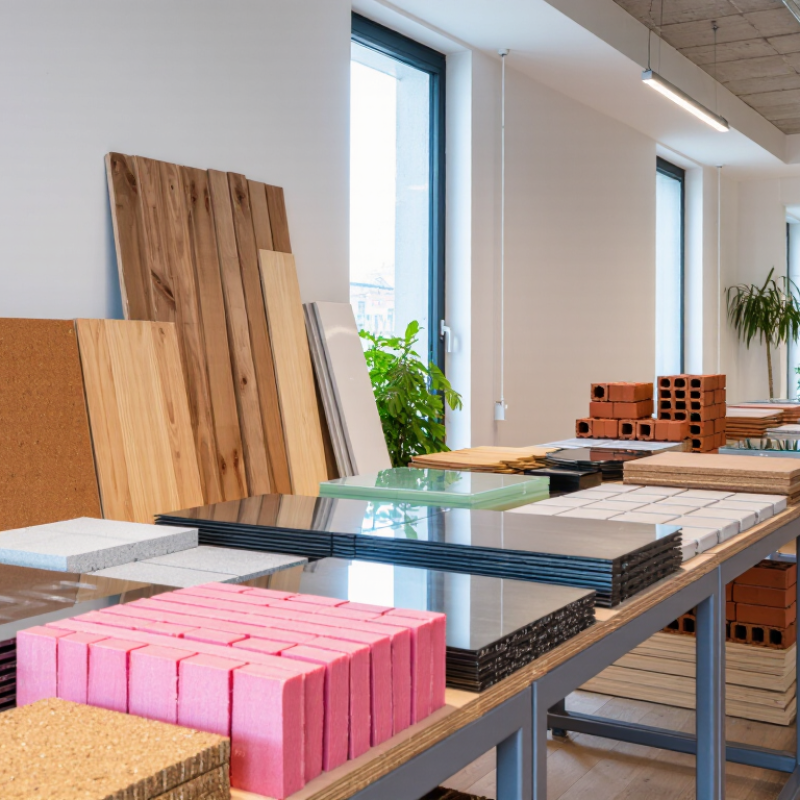
Green building materials are not defined by one feature. A material may use recycled content, come from responsibly managed sources, or require less energy to produce. Evaluators also consider durability, indoor air quality, water use, and what happens at the end of its service life. A reclaimed wood beam, for example, can avoid new production, but its condition and treatment still matter. The label can be fuzzy. Context matters.
A careful comparison looks across a material’s life cycle, from extraction and manufacturing to transport, installation, and disposal. Environmental product declarations can provide verified impact data, while health disclosures may identify chemical ingredients. Neither document tells the whole story. Performance matters too: insulation that reduces heating needs may be less useful if it gets wet or is poorly installed. Results depend on the building and climate, so broad claims deserve a closer look.
Tips: Compare similar products using the same impact measures. Check durability, maintenance needs, and local availability. Ask for documentation, not just “eco-friendly” claims. And be willing to reconsider a favorite material; good intentions do not replace evidence.
The ten leading green building materials are not a universal ranking. Climate, transport distance, durability, and sourcing all affect their impact. Reclaimed wood can keep sound beams in use, while bamboo grows quickly but may require energy-intensive processing or long-distance shipping. Recycled steel offers strength and can reduce demand for virgin ore. Recycled glass can become tiles or countertops, though processing still uses energy. Low-carbon concrete replaces some conventional cement, a major source of construction emissions. The label can mislead.
Rammed earth uses compacted soil to create dense walls, but performance depends on local soil and skilled construction. Cork, harvested from regrowing bark, can provide insulation and absorb sound. Cellulose insulation, often made from recycled paper, fits wall cavities when installed evenly and kept dry. Hempcrete combines hemp shiv with a lime binder; it can help regulate moisture, but it does not replace a structural frame. Fired clay tile can last for decades, though kiln firing consumes energy.
Project teams can compare environmental product declarations, recycled content, transport distances, and expected service life instead of relying on a “green” label alone. Details matter: gaps in insulation or moisture around a reused beam can undermine good material choices. These comparisons are useful, but rarely tidy.
Reclaimed timber reuses sound beams and flooring, reducing demand for newly harvested wood. Its strength can suit framing, but inspect for rot, pests, and hidden coatings. Bamboo grows quickly and works well for flooring or panels. Performance varies with species, adhesives, and transport distance. Recycled steel can retain high structural strength while reducing demand for virgin ore. It conducts heat readily, so exterior assemblies need careful thermal detailing. Recycled glass becomes tiles or counter surfaces, diverting material from disposal. It is durable, though cutting and installation can create waste. Details matter.
Cellulose insulation, often made from recycled paper, fills wall cavities and slows heat flow. Install it evenly; gaps undermine performance. Straw-bale walls provide substantial insulation and can regulate indoor humidity when protected from persistent moisture. Rammed earth offers thermal mass and durable walls, but insulation may be needed in cold climates. Low-carbon concrete uses alternative binders or mixes to reduce emissions; its strength and curing needs depend on the formulation. Cork is renewable and naturally insulating, making it useful for floors or wall panels, though supply and finish affect its footprint. Hemp-lime stores biogenic carbon and helps moderate temperature, but it is generally not a load-bearing substitute for structural framing. Not every site suits it. Performance claims deserve checking against local climate, installation quality, and verified product data.
Typical thermal conductivity of lower-impact insulation materials. Lower values indicate better insulating performance.
Environmental benefits and performance: Cellulose, recycled cotton, and recycled glass wool make use of recovered materials while providing effective insulation. Sheep’s wool, hemp, wood fiber, and cork are renewable or naturally derived options. Straw bales and hemp-lime can combine insulation with low-impact construction, though their conductivity varies with density and moisture.
Values are representative thermal conductivity figures in W/m·K, not product-specific ratings. Actual performance varies by product, density, moisture, and installation; check product data and environmental declarations for project decisions.
In homes, cellulose insulation made from recycled paper can fill wall cavities and attic spaces. It helps limit heat loss, especially around older framing. Wool insulation is another option for roofs and interior walls, though moisture control still matters. Cork can serve as flooring, wall panels, or underlayment beneath hard floors. It feels warm underfoot. Bamboo and reclaimed wood are often used for flooring, cabinets, and visible beams. Their appearance depends on grading, finish, and careful installation.
Commercial buildings use recycled steel for structural frames, where its strength can support long spans and flexible floor plans. Low-carbon concrete may suit foundations, floors, and exterior walls, depending on the mix and local supply. Recycled glass can become tiles, countertops, or decorative panels in lobbies and washrooms. Rammed earth is used for durable walls in suitable climates, but it needs thoughtful detailing against rain and temperature swings.
Low-VOC paints and finishes are common in both homes and offices, particularly in bedrooms, classrooms, and meeting rooms. Material choices should reflect local weather, maintenance needs, and the building’s actual use. A recycled product is not automatically the best fit. Some options cost more upfront, and availability can be uneven. I would check product documentation and ask installers about moisture, fire performance, and expected upkeep before specifying materials. No choice is perfect.
Choosing green building materials starts with the local climate, not a fashionable product list. A material that performs well in a dry region may fail in a damp, salty, or freeze-thaw environment. Moisture matters. In humid areas, check how wall assemblies dry and whether insulation can tolerate occasional wetting. In hot climates, consider roof reflectivity, shading, and thermal mass. Reclaimed wood, cellulose insulation, responsibly sourced timber, and low-carbon concrete can all be useful, but none is automatically right for every building.
Cost should include installation, maintenance, and replacement—not just the purchase price. A lower-cost insulation may need careful air sealing to perform well; durable metal roofing may cost more upfront but require fewer replacements. Compare estimates over the building’s expected service life, and ask what labor or preparation each material requires. Local availability matters, too. Shipping a lightweight product a long distance can change its environmental footprint, while a nearby option may be easier to repair.
Durability depends on details as much as material labels. Ask for test data relevant to your climate, such as water absorption, fire performance, or resistance to pests. Check whether finishes need frequent reapplication and whether damaged pieces can be replaced individually. The trade-offs are rarely neat: a recycled material might have limited supply, and a long-lasting product may be difficult to reuse later. Test a small sample, inspect installation guidance, and leave room for uncertainty in the budget.