2026 Best Home Energy Efficiency Products for Global Buyers
Global buyers are entering a more practical era of home energy efficiency. Rising energy prices, hotter summers, colder winters, and stronger environmental expectations are changing purchasing decisions. A product that saves energy in one country may perform poorly elsewhere. Climate, building design, electricity quality, installation skills, and local regulations all matter.
Energy-efficiency expert Amory Lovins is widely quoted as saying, “The cheapest energy is the energy you don’t use.” That principle guides this 2026 product overview. It examines high-performance insulation, heat pumps, smart thermostats, energy-efficient windows, solar batteries, induction appliances, and water-saving systems. Each category needs more than impressive laboratory numbers. Buyers should check verified efficiency labels, warranty terms, repair access, voltage compatibility, and installer qualifications. Measure before buying. Small choices matter.
Real homes often reveal inconvenient truths. A smart thermostat cannot fix leaking ducts. A premium heat pump may disappoint in a poorly insulated house. Solar storage can reduce grid dependence, but its value changes with tariffs, sunlight, and battery replacement costs. Performance varies. This guide therefore compares products through both technical evidence and everyday experience, including installation complexity, maintenance needs, climate suitability, and long-term operating costs. It also recognizes an important limitation: global product comparisons cannot replace local engineering advice. Buyers should confirm building codes and certified installation requirements before committing. The best solution is rarely the most expensive one. It is the system that works reliably in a specific home, for a specific climate, and for a realistic household budget.
Measuring the Market: Buildings Consume 30% of Global Final Energy (IEA)
Buildings consume about 30% of global final energy, according to the International Energy Agency. This figure changes how buyers should evaluate efficiency products. Energy loss often hides in ordinary places: unsealed windows, poorly insulated roofs, aging pumps, and inefficient lighting. A product may look advanced, yet perform poorly in the wrong building.
Global buyers should measure conditions before selecting equipment. Thermal cameras can reveal cold corners and missing insulation. Smart meters can show night-time baseloads and unusual consumption peaks. High-efficiency heat pumps, insulation systems, low-flow fixtures, and occupancy controls can reduce demand when correctly matched. Product documentation should include test methods, operating ranges, maintenance needs, and expected service life. Local climate matters.
Real projects are rarely perfect. A control system may save energy but confuse occupants. Insulation can underperform when installation gaps remain. Some efficiency claims also rely on laboratory conditions. That deserves scrutiny. Buyers should request independent testing, verified performance data, and installation guidance suited to local codes. Small changes help. Sealing a drafty door may matter more than adding expensive technology. Measuring energy use before and after installation provides stronger evidence than attractive specifications. “Efficient” should be demonstrated at the meter.
2026 Best Home Energy Efficiency Products for Global Buyers
Global Buildings Energy Use by End-Use Category
Buildings consume approximately 30% of global final energy, according to the International Energy Agency (IEA). Space heating, water heating, appliances, cooling, lighting, and cooking therefore represent major efficiency opportunities for global buyers in 2026. The end-use shares shown are rounded global estimates based on IEA buildings-sector energy-use profiles.
Source: International Energy Agency (IEA), buildings-sector energy analysis.
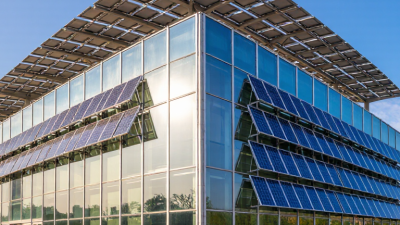
Selecting Insulation and Windows by U-Values, Air Leakage, and Payback
For global buyers, insulation and windows should be compared through U-values, air leakage, and payback.
The U.S. Department of Energy reports that windows can cause 25–30% of residential heating and cooling energy loss.
Lower U-values generally mean better insulation, but the result depends on installation quality. A window frame can weaken an excellent glass specification.
Insulation needs whole-assembly testing, not just a product label.
Thermal bridges around slabs, corners, and fasteners can reduce real performance. The International Energy Agency’s Energy Efficiency 2023 report identifies buildings as responsible for roughly 30% of global final energy use.
Sealing matters too. DOE guidance indicates that air leakage may account for 25–40% of heating and cooling energy use in typical homes.
Look for tested leakage rates at stated pressure differences. Standards vary between regions, so direct comparisons can become misleading.
Payback calculations should include local energy prices, climate, labor, maintenance, and expected service life.
A simple formula is installed cost divided by annual energy savings. However, predicted savings often look too confident. Occupant behavior, shading, humidity, and imperfect workmanship change the outcome. National Fenestration Rating Council methods separate U-factor, solar heat gain, and air leakage, helping buyers compare performance more consistently. I would request certified test reports and installation details before accepting a low U-value claim. Cheap insulation may pay back slowly if moisture control fails. Better figures are useful, but field evidence matters more.
Auditing LEDs, Appliances, and Controls for Up to 75% Lighting Savings (DOE)
For global buyers, lighting audits should begin with measured wattage, operating hours, and required illumination. The U.S. Department of Energy reports that LED products use at least 75% less energy than incandescent lamps and can last up to 25 times longer. This supports substantial savings, but only when replacement levels match the space.
Walk through the site at noon and after closing. Check dark corners, overlit desks, emergency areas, and lamps left burning in empty rooms. Occupancy sensors, daylight controls, and scheduled dimming can reduce unnecessary runtime. DOE guidance also stresses proper controls and commissioning, because poorly configured sensors may cause complaints or constant switching. That weakens real-world performance.
Appliances need the same discipline. Compare annual energy use, standby demand, duty cycles, and local voltage requirements. The International Energy Agency identifies buildings as responsible for about 30% of global final energy consumption, making efficient equipment a practical procurement priority. I would record plug-load readings for at least one week, not rely only on catalogue claims. A theoretical saving can disappear during peak production.
Human behavior remains an awkward variable. Staff may disable sensors, override schedules, or prefer brighter lighting. Training helps, though it is rarely perfect. Buyers should request test data, installation records, and measured results after commissioning. DOE’s 75% figure is credible for the right lamp comparison, not every retrofit.
Ranking Solar, Batteries, and Water Heating by Efficiency and Total Cost
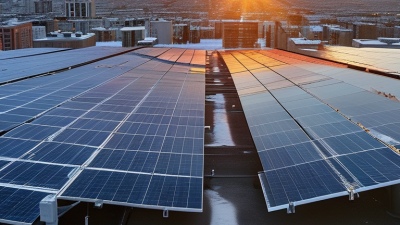
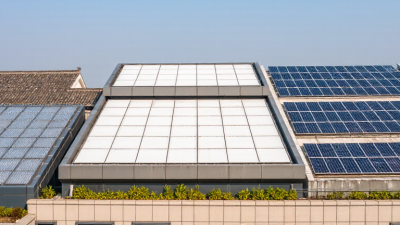
For global buyers, efficiency alone does not determine value. Solar photovoltaic systems produced electricity at a global weighted average cost of about USD 0.044 per kWh in 2023, according to IRENA’s Renewable Power Generation Costs 2023. Yet installation, financing, grid access, and local sunlight can change the result. A high-efficiency panel may perform poorly on a shaded roof. Real conditions matter.
Batteries rank differently because they store, rather than generate, energy. The IEA reported that battery pack prices fell 14% in 2023, reaching roughly USD 139 per kWh. Buyers should compare usable capacity, round-trip efficiency, warranty limits, and replacement costs. A battery losing 15% during charging and discharging needs more solar input. That hidden loss matters. Installed cost still varies widely between markets.
Water heating deserves closer attention. The U.S. Department of Energy states that heat pump water heaters can use two to three times less electricity than conventional electric resistance models. Their total cost depends on climate, hot-water demand, electricity tariffs, and installation space. They also need correct airflow. A ranking can mislead. The cheapest purchase may create higher lifetime costs, while a technically efficient system may be unsuitable for a crowded utility room. These comparisons should use local energy prices and measured household demand, not catalogue efficiency alone.