

Batteries for Solar Energy Storage
Types, Differences, and When Each Makes Sense
For many solar panel owners, electricity production is no longer the problem. Timing is.
A typical Dutch household produces the most solar power between 11:00 and 15:00, while the highest consumption happens in the evening. Historically the grid solved this mismatch through net-metering (salderen??). That situation is changing. As compensation declines and feed-in limits appear, the value of using your own electricity becomes higher than exporting it.
A home battery does one simple but important thing:
It moves your solar energy from the middle of the day to the evening and night.
However, “a battery” is not a single technology. The solar storage market actually consists of four completely different battery families, each designed for different conditions. Choosing the wrong one does not just affect price — it affects safety, lifespan, and whether the system actually works well with your home.
First: Grid-Tied vs Off-Grid
(the most misunderstood part)
Before discussing battery types, this distinction matters more than chemistry.
Grid-tied home (most houses in the Netherlands)
(most houses in the Netherlands)
- The grid is always available
- The battery stores daily surplus solar power
- Typical use: evening cooking, lighting, heat pump assistance
- Required capacity: 5–20 kWh
- Reliability requirement: moderate (grid backup exists)
Here the battery is mainly an economic and self-consumption device.
Off-grid system
(most houses in the Netherlands)
- No utility connection
- Battery powers the house continuously
- Must survive winter and long dark periods
- Required capacity: 30–200+ kWh
- Reliability requirement: extremely high
Here the battery is a primary power plant, not an accessory.
This difference is why some batteries that work perfectly in a remote cabin are actually poor choices for a Dutch suburban home.
The Four Main Battery Families
Each stores electricity using a different physical principle.
- Lead-acid batteries
- Lithium-ion batteries
- Flow batteries
- Other emerging industrial chemistries
Lead-Acid Batteries
How they work
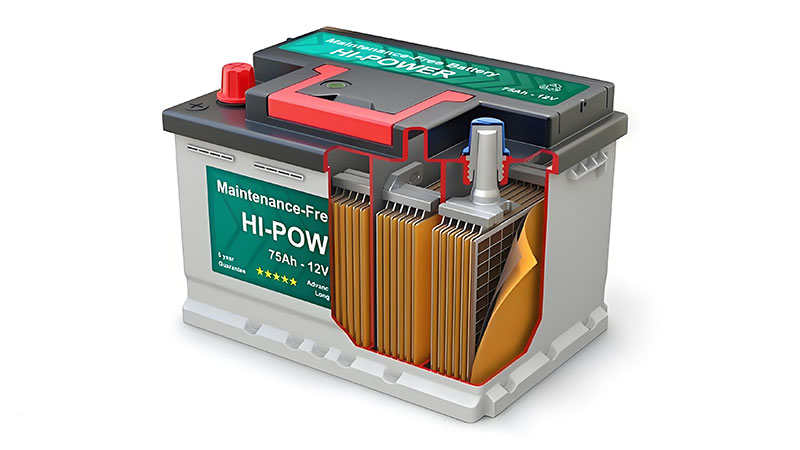
Lead plates react with sulfuric acid to store and release electricity. This is the same fundamental chemistry used in car starter batteries, but scaled for energy storage.
Solar homes charge and discharge every day. Lead-acid batteries wear out quickly under daily cycling.
Sub-types
-
- Flooded Lead-Acid
- Sealed Lead-Acid
- AGM (Absorbent Glass Mat)
- Gel
- (Hybrid lithium-enhanced lead systems occasionally marketed as “lithium lead-acid”)
Lithium-Ion Batteries
This is currently the dominant residential solar storage technology.
How they work
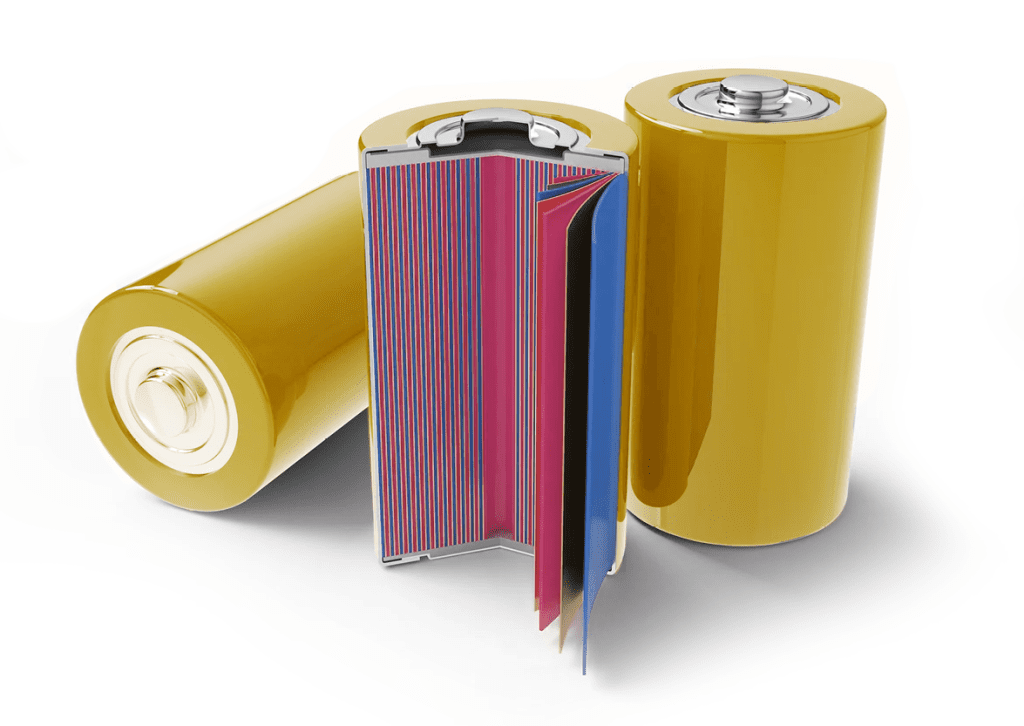
Lithium ions move between two solid electrodes. Unlike lead-acid, the reaction does not rely on liquid chemical consumption, so degradation is much slower.
Not all lithium batteries behave the same.
LFP (Lithium Iron Phosphate) is significantly more thermally stable than NMC/NCA types used in electric vehicles and consumer electronics. That stability is one of the reasons it has become the preferred chemistry for stationary home storage.
Sub-chemistries
- LCO - phones & laptops
- NMC - EVs and some home batteries
- NCA - electric vehicles
- LMO - power tools
- LFP - home energy storage
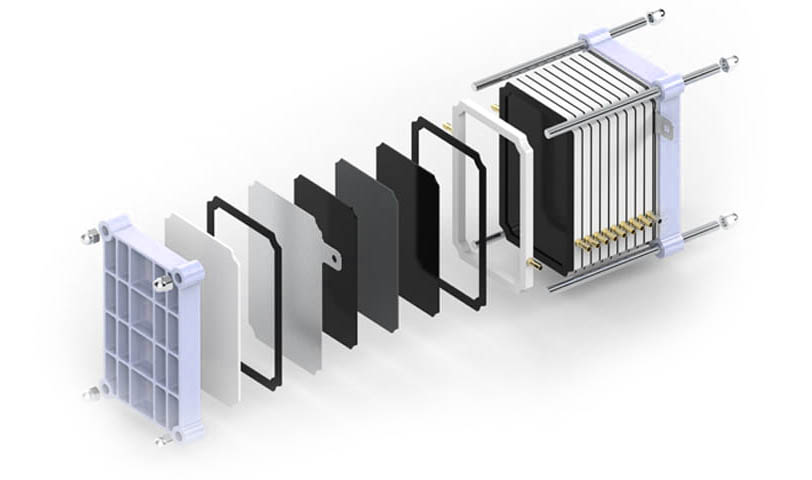
Flow Batteries
How they work
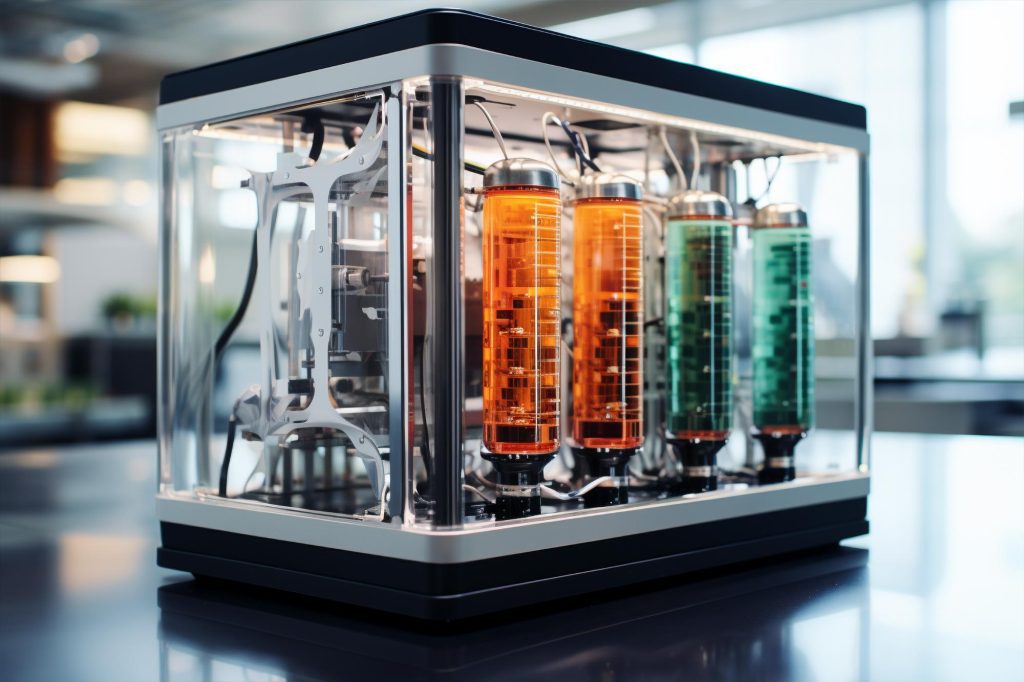
Energy is stored in two liquid electrolyte tanks. The battery size depends on the tank volume, not the reaction chamber.
Flow batteries are often discussed in the future of energy storage — but practically, they are grid infrastructure technology, not a typical home solution.
Common types
- Vanadium Flow
- Zinc-Bromine
- Iron-Chromium
- Organic flow systems
Other Battery Technologies
Typical use
Utility grids, airports, factories, or research projects.
They often offer: High temperature operation, Massive capacity & Long life
But also: Very high cost, Complex installation & Safety or regulatory constraints
Sub-types
- Sodium-Sulfur (NaS)
- Nickel-Cadmium
- Solid-state (emerging)
- Aluminum-ion
- Industrial redox systems
A battery comparison
| Lead-Acid | Lithium-Ion | Flow Batteries | |
|---|---|---|---|
| Cycle life | 500-1200 / 1800+ (30% DoD) | 300-500 (LCO) / 2000-6000 (LFP) | 10000-20000+ |
| Depth of discharge | 50% | 80-100% | 100% |
| Efficiency | 80-85% | 90-96% | 65-80% |
| Maintenance | Medium to high | None | Yes |
| Fire risk | Very low | Low-moderate | Extremely low |
| Weight | Very heavy | Light | very large |
| Cost | Low upfront | Medium upfront, low lifetime cost | High upfront |
| Strengths | Very safe chemistry | Low purchase price | Works in cold temperatures | Easy to recycle | Long lifespan (10–20 years typical) | Compact size | High usable capacity | High efficiency | Works well | High amount of cycles | Extremely long lifespan | Very safe | Can be fully discharged daily | Capacity easily scalable |
| Weaknesses | Short lifespan in daily cycling | Requires ventilation | Large and heavy | Cannot be deeply discharged | Higher purchase price | Requires battery management electronics | Some chemistries sensitive to high temperature | Large tanks required | Lower efficiency | Expensive for homes |
| Best use cases | Off-grid cabins with low budgets, Backup power systems used occasionally &Locations with cold climates and limited electronics | Grid-tied solar homes, Heat pump households, Self-consumption optimization & Peak shaving | Industrial buildings, Solar farms & Community energy storage |
| Poor use cases | Daily solar storage in grid-tied homes, Homes with limited installation space & High-cycle applications (heat pumps, EV charging) | Extremely cold conditions & very large seasonal storage | Residential houses & Small technical rooms |
| Home Solar | Poor | Excellent | Not practical |
| Off-Grid | Acceptable | Good | Possible |
| Industrial | Limited | Good | Excellent |
| Safety | Very safe | Safe | Extremely safe |
| Space needed | Large | Compact | Very large |
Why Batteries Matter More in the Netherlands Now
Three changes are happening simultaneously: Reduction of net – metering, Local grid congestion – Electrification (heat pumps, EVs). This means solar energy is increasingly valuable at the moment you use it, not when you produce it.
A battery increases self-consumption, grid independence and energy predictability. It does not necessarily eliminate the grid, but it reduces reliance on it.
A realistic expectation
A home battery:
- will not make a house fully off-grid in winter
- will not store summer energy for December
- will significantly reduce evening electricity purchase
For most Dutch households, the battery functions best as a daily cycle energy buffer, not a seasonal storage system.
A final perspective
For residential solar users, the comparison typically narrows quickly:
- Lead-acid: budget off-grid
- Flow: infrastructure scale
- Industrial chemistries: specialized
- Lithium-ion (especially LFP): daily solar household storage
This is why most modern residential storage systems — and nearly all new integrated solar-roof solutions — are built around lithium-iron-phosphate technology. Not because it is fashionable, but because its cycle life, efficiency, safety behavior, and compact size align with how homes actually consume solar energy.