

When Arguments Miss the Point Entirely
There’s a particular kind of disconnect that happens when people argue about sustainability. We’ve lost the thread of what we’re actually talking about when we discuss the future of this world.
The word “sustainability” is thrown around like a political football, weaponized and emptied of meaning. Meanwhile, someone dismisses rising sea levels because they don’t live by the coast. A project manager argues against building-integrated photovoltaics because the upfront cost doesn’t fit this quarter’s budget. And the problems continue their patient march forward, indifferent to our debates, to our economic models, to whether we think it affects us personally or not.
The strange thing about arguing over whose problem this is, is that it presumes problems respect boundaries. They don’t.
The Real Question Nobody's Asking
Think about a child you know. Maybe it’s your own, maybe a niece or nephew, maybe the kid next door who waves at you from their bicycle. Now imagine that child at forty years old. Then imagine their child at forty. Keep going—four, five generations down the line.
What kind of buildings will they live in? What will their energy cost? Will they have stable electricity? Will their cities be designed around extraction or regeneration? These aren’t abstract people. They’re as real as you are, as deserving of clean energy and stable infrastructure and the simple possibility of a good life. They just haven’t arrived yet.
Beyond the Quarterly Report
We’ve become masters at the small view—the quarterly earnings report, the next election cycle, the renovation that will boost property value before we sell. But somewhere along the way, we lost the ability to hold two timescales in our minds at once. We stopped asking: What happens after I’m gone?
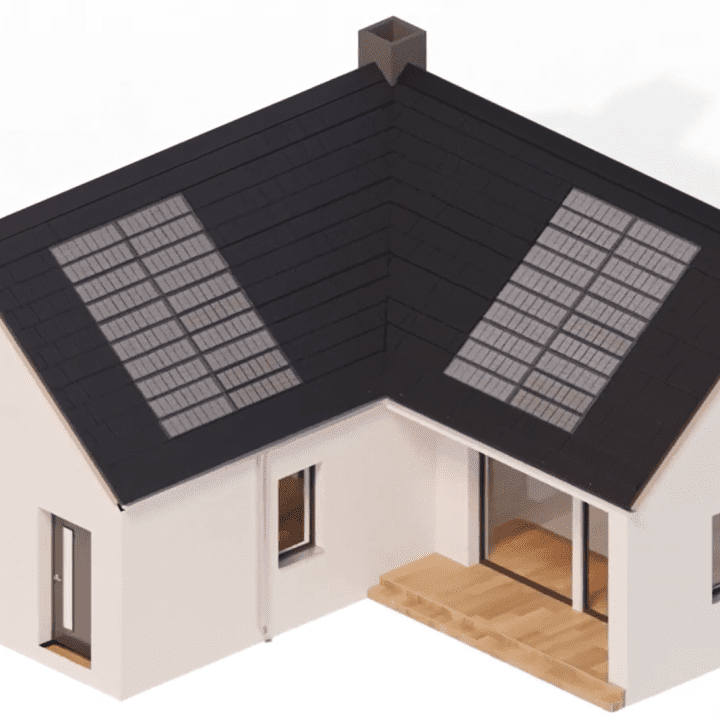
When we install solar panels that will produce clean energy for 25-30 years, we’re not just making a purchase. We’re making a choice that ripples forward. When we integrate photovoltaics into the building envelope itself—into facades, roofing, even windows—we’re not following a trend. We’re fundamentally rethinking how structures interact with their environment for decades to come.
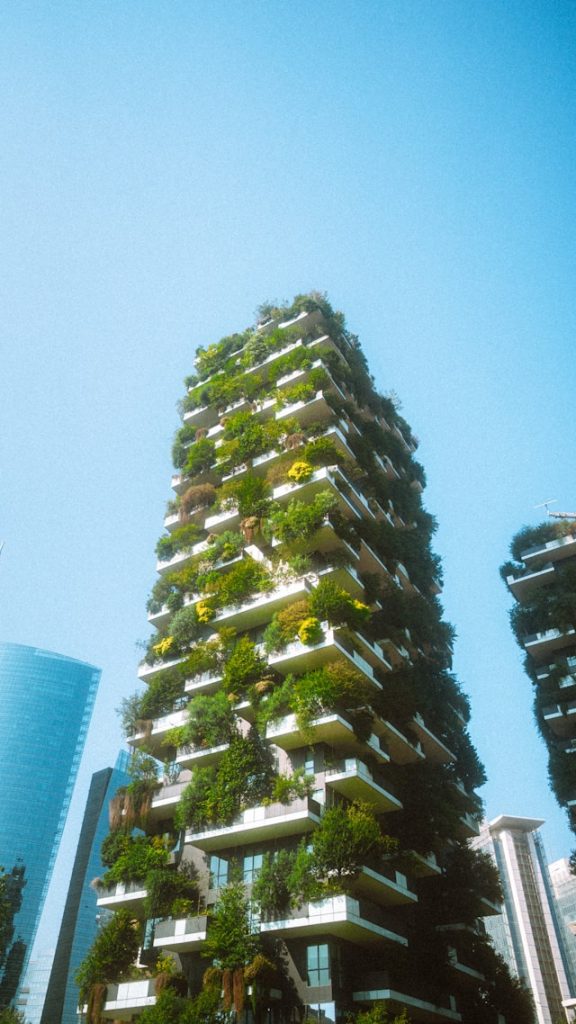
But BIPV is just one piece. The buildings we design today will either trap heat or breathe naturally. They’ll be sealed boxes demanding constant climate control, or they’ll work with insulation and natural ventilation. They’ll be concrete islands in a heat wave, or they’ll be surrounded by greenery that cools the air and manages stormwater. Every choice—the materials we select, the green roofs we install or skip, the orientation of windows, the thermal mass we build in—cascades forward through generations.
What Building-Integrated Photovoltaics Actually Means
More Than Panels on a Roof
Here’s what most people miss about BIPV: It’s not just about generating electricity. It’s about reimagining what a building is—transforming it from a passive consumer of energy into an active participant in powering itself and the grid around it.
A conventional building takes. It takes energy from the grid, materials from the earth, space from the landscape. It demands and consumes for its entire lifetime, then becomes waste when we’re done with it.
A building with integrated photovoltaics begins to give back. Not as an afterthought, not as panels awkwardly bolted on, but as part of its fundamental design. The facade that faces south becomes a power generator. The glass that lets in light also converts it to electricity. The roof that sheds rain also harvests energy.
This isn’t futuristic thinking. This is happening now, today, in projects across Europe, Asia, and North America.
The Economics of Legacy
“But the cost,” someone always says. And yes, there’s an upfront investment. But here’s what that argument misses entirely:
We’re not comparing cost to cost. We’re comparing one kind of future to another.
In one future, we build the same way we’ve always built—extracting, consuming, externalizing every cost we can push onto someone else or some other time. In that future, energy prices remain volatile, grids remain fragile, and buildings remain dependent.
In another future, we build structures that produce as much as they consume. Buildings that reduce strain on infrastructure. Facades that generate revenue. Neighborhoods that become micro-grids, resilient and self-sustaining.
Which future do you want your grandchildren and oncoming generations to inherit?
The Seventh Generation Principle in Glass and Silicon
Indigenous cultures, like the Iroquois, have long understood the Seventh Generation Principle—that every decision should consider the impact seven generations into the future. Not because they were more noble or enlightened, but because they understood something fundamental: We are not separate from the future. We are its architects, whether we accept that responsibility or not.
What This Means in Practice
When we design a building today with integrated photovoltaics, we’re making decisions that will affect:
- Generation 1: Us, now, in reduced energy costs and increased property value
- Generation 2: Our children, who inherit infrastructure that pays dividends rather than demanding investment
- Generation 3: Their children, who grow up in a world where energy-positive buildings are normal, not exceptional
- Generations 4-7: People we'll never meet, living in cities we helped shape, breathing air we helped clean, using grids we helped stabilize
This isn’t abstract. Every BIPV installation is a vote for that future. Every building that generates its own power is a small act of kinship with people who don’t exist yet.

Beyond Trends & Talking Points
The Trap of Making It Optional
The tragedy of our moment is not that we lack solutions. We have them—BIPV, energy storage, smart grids, circular building materials. The tragedy is that we’ve made the whole thing optional, a matter of personal belief or brand identity rather than collective responsibility.
As if the physics of energy and climate care about our opinions. As if choosing not to act is somehow not making a choice.
But every building we construct is a choice. Every facade, every roof, every square meter of surface that faces the sun is either an opportunity taken or an opportunity lost. Not just for us, but for everyone who comes after.
What Solinso Understands
This is why companies like Solinso matter—not because of the technology itself, though the technology is elegant and powerful. But because of what that technology represents: a different relationship with buildings, with energy, with time itself.
When you integrate photovoltaics into the building envelope, you’re saying: This structure will give back. It will produce. It will participate in powering the world around it. And it will do so not for five years or ten, but for the entire lifespan of the building.
That’s not a product decision. That’s a philosophical stance.
An Invitation, Not a Lecture
This isn’t about guilt. Guilt is a small emotion, and this moment calls for something larger.
The invitation is simple: Look at it differently.
Not through the lens of sacrifice or burden or political identity. Not through the tired binary of optimism versus pessimism or which side of the sustainability debate you’ve planted your flag on.
But through the lens of kinship with people who don’t exist yet but will. Whose lives will be shaped by the buildings we design, the infrastructure we install, the choices we make right now, in this moment, together.
The Question That Matters
The question isn’t whether building-integrated photovoltaics fit your budget this quarter. The question isn’t whether you personally believe in climate change or sustainability or whatever label we’re fighting over this week.
The question is simpler and more profound: What kind of ancestor do you want to be?
When your great-great-grandchildren stand in the buildings we’re constructing now, what will those structures say about us? That we couldn’t see past next year’s balance sheet? Or that we understood we were part of something continuous, something larger than ourselves?
The Choice Is Being Made
Here’s what’s true whether we acknowledge it or not: We are choosing right now. The buildings going up this year, with or without integrated photovoltaics, with or without regenerative design, with or without any thought to the future—they’re all choices. They’re all votes cast for one kind of world or another.
The future generations are already reaching back to us through time, asking: Did you see us? Did you think of us? Did you build as if we mattered?
The technology exists. The knowledge exists. Companies like Solinso are proving that beautiful, functional, energy-positive architecture isn’t a fantasy—it’s a choice available to us right now.
The only question left is: Will we choose it?
Not because we have to. Not because someone forced us. But because we understood, finally, that we are not isolated individuals but links in a chain. And what we do here, now, ripples forward in ways we can barely imagine.
"Build as if the future generation is watching.
Because someday, they will."