

China Best Solar Roof Innovations for Global Buyers?
China’s solar roof market is changing quickly, with products ranging from building-integrated photovoltaic panels to solar tiles designed to resemble conventional roofing. For global buyers, the appeal is practical: a roof can generate electricity while protecting the building. Yet not every product suits every project. Roof shape, local weather, installation skills, and replacement-part availability all affect real-world performance.
A closer look at solar roof innovation should go beyond appearance and headline efficiency figures. Buyers can compare power output, warranties, fire and wind ratings, inverter compatibility, and documented test results. Ask how performance was measured, and request technical datasheets rather than relying on promotional claims. Small details matter. A shaded dormer or poorly planned cable route can reduce output or complicate maintenance. Certification requirements also vary by destination, so confirm applicable standards with qualified local professionals before ordering.
Manufacturers in China offer a broad range of designs and production capabilities, but “best” depends on the building and the buyer’s priorities. Some projects value a seamless finish; others need easier repairs or predictable long-term service. Neither choice is automatically right. Even strong specifications cannot guarantee a smooth installation if communication, shipping schedules, or installer training fall short. This guide considers product types, quality checks, costs, and supplier questions to help international buyers make informed comparisons. There is no perfect roof for every site, and that is worth remembering.
What Solar Roof Technologies Are Emerging in China?
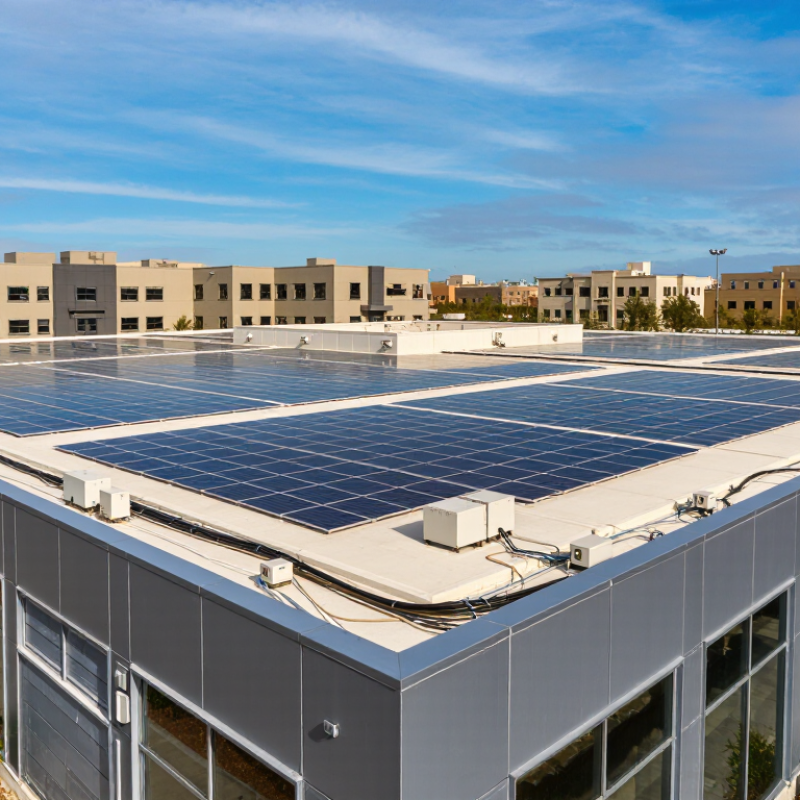
China’s emerging solar-roof technologies are moving beyond standard panels bolted onto rails. Building-integrated photovoltaics (BIPV) use power-generating glass, façade panels, or roof tiles as part of the building envelope. For buyers, the practical appeal is clear: fewer visual interruptions and potentially simpler space planning. But installation quality matters. Water sealing and cable routing can make or break a roof system.
The scale is significant. China’s National Energy Administration reported 216.88 GW of new solar capacity in 2023, including 96.29 GW of distributed systems. IEA PVPS’s Trends 2024 report estimated global solar capacity had surpassed 1.6 TW by the end of 2023, reflecting a fast-growing market for rooftop applications. Flexible thin-film modules and perovskite-silicon tandem cells are also attracting attention for lighter roofs and higher conversion potential. Yet many newer formats still need longer field records. Promising is not the same as proven. Buyers should compare certified power output, fire performance, waterproofing details, and replacement procedures—not just laboratory efficiency. One uncomfortable gap remains: roof designs differ, and integration standards are not always consistent. A panel that performs well on a test rig may disappoint on a hot, dusty roof.
| Technology | How It Integrates with a Roof | Market Readiness | Potential Advantages | Key Considerations for Buyers | Typical Fit |
|---|---|---|---|---|---|
| Glass-glass building-integrated photovoltaics (BIPV) | PV laminates serve as part of the building envelope, such as roof glazing, canopies, or façade elements. | Commercially available; project design and product availability vary by application and market. | Can combine power generation with weather protection or architectural glazing, reducing the need for a separate module layer in some designs. | Check structural loading, fire classification, waterproofing details, electrical safety, replacement access, and local building-code approval. | New construction, commercial buildings, atriums, and canopies where architectural integration is planned. |
| High-efficiency crystalline-silicon modules, including TOPCon and HJT | Conventional framed or glass-glass modules are mounted above the roof on a racking system. | Commercially established. TOPCon is widely deployed; HJT is also commercial, with availability dependent on supplier and market. | Uses familiar rooftop installation methods and can provide high power output per module area compared with older cell designs. | Compare independently verified module ratings, temperature coefficients, degradation warranties, dimensions, and compatibility with the inverter and mounting system. | Most residential, commercial, and industrial roofs suitable for standard rack-mounted PV. |
| Solar roof tiles and shingles | Small PV units are designed to form part of the visible roof surface rather than sit on a conventional rack. | Available in selected markets, but less standardized and generally less widely deployed than conventional modules. | Can create a more integrated roof appearance and may be considered when replacing roof coverings. | Assess installed cost, output per roof area, installer availability, repair procedures, water-tightness warranty, and whether damaged units can be replaced individually. | Roof replacement projects and buildings where appearance is a major design requirement. |
| Lightweight or flexible thin-film PV | Lightweight laminates or flexible modules can be attached to suitable roof surfaces, sometimes with reduced structural loading. | Commercial products exist for specific applications; product types and certifications differ substantially. | May suit roofs with limited load capacity or curved surfaces that are difficult to use with rigid framed modules. | Verify fire and building-code compliance, attachment method, wind resistance, service life, repairability, and tested output under site conditions. | Weight-constrained roofs, selected curved surfaces, and projects requiring low-profile installations. |
| Perovskite-silicon tandem PV | Perovskite and silicon absorber layers are combined in a tandem cell, typically packaged as a module for rooftop use. | Emerging technology; commercial deployment and long-term field-performance data are less established than for conventional silicon modules. | Tandem designs aim to capture more of the solar spectrum than a single-junction silicon cell. | Request independent module certification, long-duration reliability and outdoor-aging data, warranty terms, and evidence of production-scale consistency. | Buyers evaluating newer technology through carefully reviewed pilot or early-adoption projects. |
| Rooftop PV paired with battery storage and smart controls | Solar modules connect to an inverter, battery, and energy-management system; this is a system-level innovation rather than a different PV cell type. | Commercially available, subject to local product approvals and grid rules. | Can shift some solar energy to later use, provide backup where the system is designed for it, and support load management. | Check battery chemistry and safety certifications, usable capacity, power rating, backup capability, system compatibility, and local interconnection requirements. | Homes and businesses seeking self-consumption, backup power, or managed energy use. |