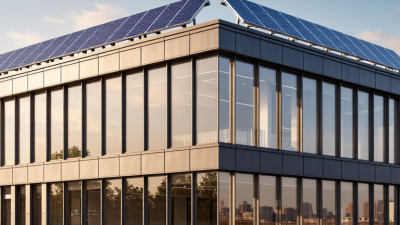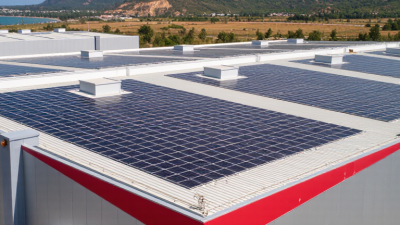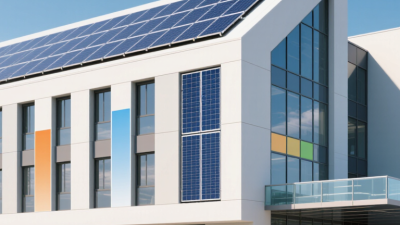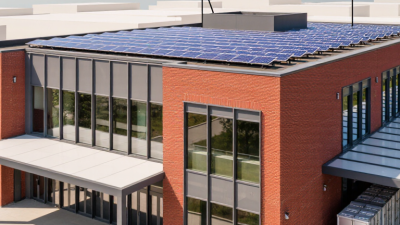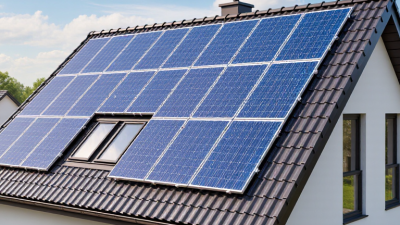
Choosing building integrated photovoltaics in 2026 is not simply a matter of selecting attractive solar glass. It means evaluating how a power-producing material performs as part of a roof, façade, skylight, or shading system. The opportunity is growing. IEA PVPS reported that global photovoltaic capacity exceeded 1.6 terawatts by the end of 2023 in its Trends in Photovoltaic Applications 2024 report. That figure covers the wider solar market, not BIPV alone. The distinction matters. Market growth does not prove that every integrated product suits every building.
A practical selection begins with the project itself: climate, orientation, structural loads, daylight needs, and expected electricity use. Then compare verified output, weather resistance, fire performance, maintenance access, warranties, and compatibility with the building envelope. Ask for product-specific test data, not only attractive renderings. A south-facing glass façade may generate less than expected if neighboring towers cast long shadows. Details count. Guidance from organizations such as IEA PVPS and national building research agencies can help teams assess performance claims, while local professionals must confirm applicable technical requirements. No single product is best everywhere. I would also question assumptions about payback; installation complexity and replacement costs can change the calculation. This guide outlines how to compare system types, suppliers, project constraints, and lifecycle value before specifying a solution.
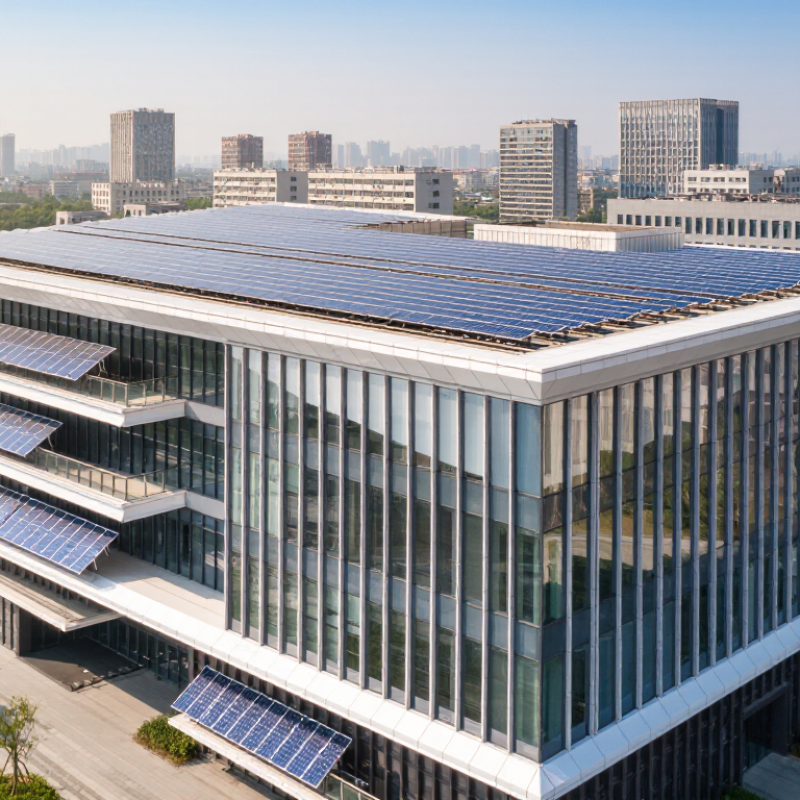
Choose building-integrated photovoltaics (BIPV) by defining the job before comparing products: generate electricity, replace cladding, provide shade, or combine these functions. These aims can compete. A transparent façade may preserve daylight but produce less power than an opaque roof section. The 2023 Global Status Report for Buildings and Construction estimates that buildings and construction used 34% of global energy and produced 37% of energy- and process-related CO₂ emissions in 2022. That scale makes efficiency and on-site generation relevant, but it does not prove a particular building suits BIPV. Set a measurable target, such as annual kilowatt-hours, peak-load reduction, or a specific architectural outcome.
Map roof and façade areas, orientation, nearby shade, and maintenance access. Then check structural capacity, weatherproofing, and daylight needs with the project team. A wall may receive less useful sunlight than a smaller roof, especially when neighboring buildings cast winter shadows. Compare modeled hourly output with the building’s load profile, not just annual demand. IEA PVPS reported 456 GW of new solar PV capacity worldwide in 2023, bringing cumulative capacity beyond 1.6 TW (Trends in Photovoltaic Applications 2024). That growth is context, not a design guarantee. Early shade estimates can be too optimistic; I would question them twice. Request a site-specific simulation and a clear module-replacement plan.
Define project goals, building constraints, and energy needs before selecting a BIPV system.
This planning example estimates annual generation using a specific yield of 1,000 kWh per kWp per year: a simple calculation, not a site-specific forecast. Compare the estimate with the building’s annual electricity use, then refine it for local solar conditions, orientation, shading, usable surface area, and product performance.
Choosing building-integrated photovoltaics means comparing how each system generates power and performs as part of the building envelope. Crystalline-silicon panels typically offer strong output, but opaque modules limit daylight. Semi-transparent photovoltaic glass can preserve views and soften glare, though its electricity production may be lower. Thin-film products can suit curved or lightweight surfaces. Check tested performance data, not just appearance.
Materials shape both durability and design. Glass-to-glass modules may work for façades or canopies, while photovoltaic roof tiles can blend with pitched roofs. Ask how the assembly handles water, heat, wind, and replacement. A beautiful detail matters little if a cracked unit is difficult to access. Look closely at edge seals and mounting points. Small details count.
Match the technology to orientation, shading, and the building’s visual rhythm. A south-facing surface may receive useful sun, but nearby towers or deep overhangs can reduce output. Model seasonal shadows before fixing module sizes. Coordinate electrical routes with structural supports and interior finishes early; late changes can disrupt all three. The neatest-looking option is not always the sensible one. That trade-off deserves a second look.
Choosing building-integrated photovoltaics in 2026 starts with the building’s climate, not a panel’s rated output. Map seasonal sun, nearby shading, and roof or façade orientation. A south-facing wall may produce less than expected if winter shadows cross it each afternoon. High temperatures can also reduce electrical output, while snow, salt air, and wind affect durability. Small details matter. Check that the proposed assembly can shed water and tolerate local exposure without compromising the building envelope.
Codes vary by location and building type, so confirm requirements with the local authority and qualified design professionals early. Ask how the system affects fire classification, structural loads, electrical protection, ventilation, and access for maintenance. Because BIPV materials can serve as both construction elements and generators, replacement details matter too. A mock-up or sample junction can reveal awkward flashing before installation. I would not assume a standard roof detail transfers cleanly to a photovoltaic façade; that is an easy mistake.
Compare modeled annual output with realistic operating conditions. Include orientation, shading, temperature losses, wiring, inverter efficiency, and likely downtime. Request the assumptions behind the estimate, not only the headline figure. Check where cables run and how technicians will reach damaged sections. A system that performs well on paper may be difficult to maintain in a narrow service area. Leave room for uncertainty; weather and building use rarely match a perfect model.
In 2026, compare building-integrated photovoltaics (BIPV) with the façade or roofing they replace, not just with rooftop panels. NREL’s Q1 2023 cost benchmark estimated a conventional commercial rooftop PV system at about $1.83 per watt DC; it is a useful reference, not a BIPV quote. Custom glass, electrical design, access, and installation can raise project costs. Ask for separate prices for generation equipment, building materials, and labor. Then subtract only incentives your project can actually claim. Tax credits and rebates depend on location, project structure, and current eligibility rules. Details matter.
Warranties need the same careful comparison. Check product coverage, expected power output, installation workmanship, and whether the system maintains the weather barrier. A long module warranty does not automatically cover leaks or façade repairs. For lifecycle estimates, Jordan and Kurtz’s review of PV field studies found median annual degradation near 0.5%; actual results vary with climate and maintenance. Use that as a planning assumption, not a promise. Compare energy savings over the service life against cleaning, inspections, inverter replacement, and repair access. A spreadsheet can still mislead: shaded windows, awkward façade angles, or a difficult replacement route can weaken projected returns. Ask for assumptions in writing, and test a lower-output scenario before approving the design.
Use this comparison as a project-screening guide. Building-integrated photovoltaics (BIPV) serve as both a building-envelope component and a power generator. Costs, energy output, warranty coverage, and incentives depend on the design, location, contract, and applicable rules.
| Option | Typical Applications | Upfront Cost Considerations | Energy-Generation Considerations | Envelope and Design Considerations | Best Fit |
|---|---|---|---|---|---|
| BIPV roof products | New roofs or major roof replacements; solar shingles, tiles, or other power-generating roof elements. | Often more expensive than standard roofing alone. Compare the full installed BIPV roof price with the combined cost of a conventional roof plus a separate PV system; account for removal and replacement work avoided. | Output depends on roof orientation, pitch, shading, climate, and usable area. Roof-integrated products may run warmer than well-ventilated rack-mounted modules, which can affect production. | Coordinate roofing, flashing, drainage, fire classification, ventilation, and electrical work. Confirm who is responsible for watertightness at joints and penetrations. | Projects already planning a roof replacement, especially where a low-profile appearance is important. |
| BIPV façade or curtain wall | Opaque or semi-transparent exterior walls, spandrel areas, and glazed façades. | Can carry a higher project cost because of custom façade engineering, glazing, structural interfaces, and specialist installation. Compare against the specified façade system, not against PV modules alone. | Vertical orientation and shading from nearby buildings can reduce annual output relative to a well-oriented roof array. East-, west-, and south-facing surfaces have different production profiles. | Evaluate thermal performance, daylight transmission, glare, fire safety, water management, structural loads, and access for maintenance. | New construction or façade-renewal projects with suitable exposure and a strong architectural or envelope-integration objective. |
| BIPV solar shading or canopy | Overhangs, brise-soleil, entrance canopies, and similar structures. | Assess the incremental cost of PV, wiring, and controls against the cost of the planned shading or canopy structure. Structural steel, foundations, and custom connections can be major cost items. | Production varies with tilt, orientation, shading, and the amount of module area. Shading can also reduce solar heat gain through windows. | Design for wind and snow loads, drainage, safe access, glare control, and protection of the area below. | Buildings that need solar control or covered outdoor space as well as on-site generation. |
| Conventional rack-mounted PV benchmark | Roof or ground-mounted PV installed separately from the building envelope. | Often offers a simpler cost benchmark when the existing roof or façade does not need replacement. Include roof repairs, mounting, and any future removal or reinstallation in the comparison. | Modules can often be positioned and ventilated independently of the envelope, but output still depends on site conditions and system design. | PV and weatherproofing are separate systems; mounting penetrations and future roof work require coordination. | Projects prioritizing a straightforward PV installation where envelope integration is not a requirement. |
Cost comparison rule: Request an itemized, like-for-like estimate. Separate PV equipment and electrical work from the building-envelope components, then credit the conventional roofing, glazing, or shading costs that BIPV replaces. A single price-per-watt figure can be misleading when projects include different envelope scopes.
| Potential Value Source | What to Check | Information Needed Before Approval | Key Caution |
|---|---|---|---|
| U.S. federal clean-energy tax provisions | Determine whether the project and the BIPV components qualify under the federal rules applicable to the project’s construction and placed-in-service dates. | Written tax advice based on project ownership, construction timeline, equipment, labor requirements, and current IRS guidance. | Do not assume a particular credit percentage or eligibility in 2026. Federal provisions and deadlines can change, and requirements may differ by project type. |
| State and local incentives | Search current state, municipal, and public-benefit programs for solar, building electrification, or qualifying construction. | Program rules, application deadlines, funding limits, eligible costs, and whether approval is required before work starts. | Availability and value vary by location and may change during the project. |
| Utility programs and export compensation | Check interconnection requirements, net-metering or export-credit terms, time-of-use rates, demand charges, and any storage requirements. | Current tariff, expected self-consumption, export limits, meter configuration, and utility approval timeline. | Exported electricity may be credited differently from electricity used on site; do not value every generated kilowatt-hour at the retail electricity rate. |
| Building or resilience incentives | Check whether local programs support high-performance envelopes, shading, resilience, or solar-ready construction. | Program definitions, required energy-performance documentation, eligible BIPV scope, and proof of installation. | Do not count the same cost twice if a program restricts combining incentives. |
| Item to Compare | Common Contract or Industry Pattern | Questions for the Bidder | Lifecycle Importance |
|---|---|---|---|
| PV product warranty | PV product warranties vary by product; many conventional crystalline-silicon module warranties fall within a 10–25-year range. BIPV products may have different terms. | What defects are covered? Who handles labor, shipping, removal, and reinstallation? Does coverage transfer to a new building owner? | A replacement may require façade or roof work in addition to electrical work, so labor and access terms matter. |
| Power-performance warranty | Many conventional PV modules provide a long-term output warranty, commonly around 25–30 years. The guaranteed output curve and exclusions differ by product. | What output is guaranteed at each year? How is a shortfall measured? Are shading, temperature, and system availability treated separately? | Use the warranty’s actual degradation schedule in the financial model rather than assuming a generic output guarantee. |
| Roof or façade weatherproofing | Envelope warranties are separate from PV product and power warranties unless the contract explicitly combines them. | Who warrants flashing, seals, water ingress, condensation control, and workmanship? Is the warranty coordinated across trades? | Water intrusion can create repair costs unrelated to PV electrical performance. |
| Inverter, wiring, and controls | These components have their own warranty terms and may not match the PV module warranty period. | What are the coverage period, replacement cost, expected service life, monitoring provisions, and response time? | Include likely component replacement, service labor, and system downtime in lifecycle costs. |
| Maintenance and access | Maintenance needs depend on the product, site, cleaning conditions, electrical design, and access method. | Are inspections, cleaning, monitoring, and safe access included in the service plan? Are replacement components available? | Include planned maintenance, access equipment, and possible envelope repairs in the ownership-cost comparison. |
| Scenario Input or Result | Illustrative Value | How to Interpret It |
|---|---|---|
| System capacity | 100 kW DC | Example system size only; not a recommended size for every building. |
| First-year specific yield assumption | 1,200 kWh per kW per year | A modeling assumption for illustration. Actual yield depends on location, orientation, shading, system design, and weather. |
| Estimated first-year generation | 120,000 kWh | Calculated as 100 kW × 1,200 kWh per kW. |
| Annual degradation assumption | 0.5% per year | Illustrative modeling assumption, not a guarantee. Use the selected product’s performance warranty and project-specific engineering estimate. |
| Estimated generation over 25 years | Approximately 2.83 million kWh | Calculated using 120,000 kWh in year one and 0.5% annual degradation. Excludes downtime, curtailment, shading changes, and component failures. |
| Energy value | Project-specific | Value each kilowatt-hour using the applicable on-site electricity cost or export compensation, accounting for rate changes, self-consumption, and utility tariffs. |
Selection checklist: Compare net envelope-plus-energy costs, model production using the actual building orientation, confirm incentive eligibility for the specific project and date, review PV and weatherproofing warranties separately, and include maintenance, component replacement, and utility compensation assumptions in the lifecycle analysis. All figures in the energy scenario are illustrative rather than a site-specific forecast.
Choosing a building-integrated photovoltaic provider in 2026 means checking more than panel efficiency. Ask who will coordinate the architect, electrical designer, roofer, and installation crew. Confirm that the provider has completed projects using a similar roof or façade system. Review references, design documents, product warranties, and the proposed maintenance plan. Small details matter. A tidy proposal is not proof that every trade has agreed on the same installation sequence.
Tips: Request a written scope that names responsible people, expected site visits, and required inspections. Ask how the team will protect waterproofing during installation. Compare warranty coverage for the photovoltaic components and the building envelope. Clear answers build confidence.
Before signing, confirm that the site is ready for the work. Check that drawings show cable routes, connection points, drainage, and access for future repairs. Make sure the structure has been assessed for the added system loads. Identify outstanding permits, utility coordination, and material lead times with the relevant project professionals. A rooftop mock-up or sample façade panel can reveal awkward joints and glare before work begins. I would still expect some revisions; real buildings rarely match clean drawings perfectly. Keep a written list of open decisions, and assign an owner to each one before materials arrive.