


The Accidental Discovery by 19-year-old Edmond Becquerel
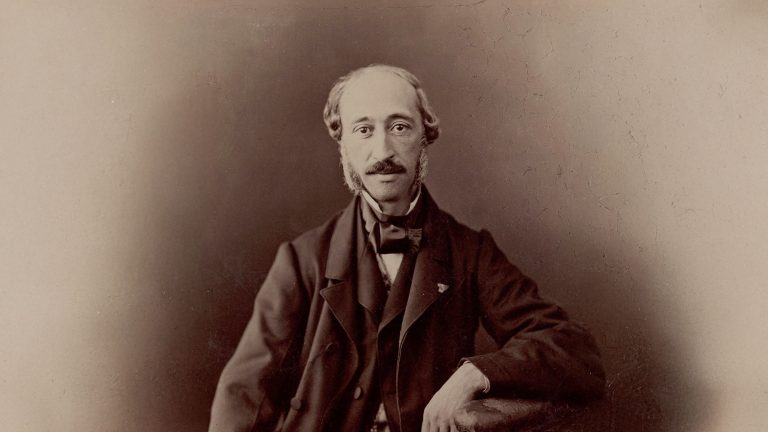
As a 19-year-old, Edmond Becquerel was researching whether light had any effect on electrical reactions in 1839. He expected the electrical reaction to speed up or slow down, but never expected the light to be the source of the electrical power generated. Although it was not efficient in any way, the photovoltaic effect was discovered that day in 1839.
An effect and development without a theory
From that day in 1839, it took over a century before commercial silicon wafer solar panels were introduced. It even took 34 years before another breakthrough was discovered—namely, the discovery of the effect of light on selenium by Willoughby Smith in 1873. Ten years later, Charles Fritts built the first stable solar cell, selenium with a thin layer of gold, and reached a 1% efficiency for that cell. Considering the early stages of the development, this was quite an achievement in 1883.
Of course, this phenomenon sparked curiosity among many scientists, including Heinrich Hertz and his successors, such as Edward Weston, who obtained the first solar patent in 1888.
Efficiencies rise and knowledge is gained.
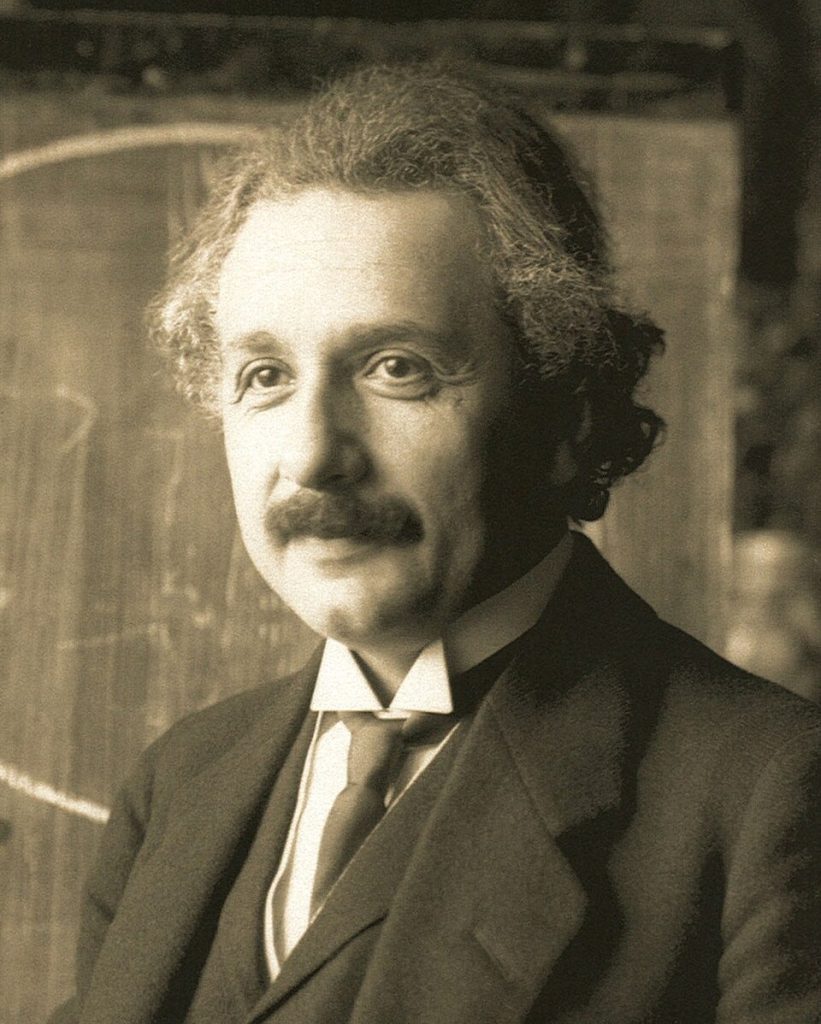
Many scientists were gaining interest in this subject and conducted experiments in the early 20th century, but the underlying effect that caused it was not well understood until Einstein introduced his photon quantum theory, which explained how light consists of discrete energy packets (photons) that can eject electrons from a material. To many of us, this is common knowledge nowadays. But in 1905, this was a radical breakthrough that challenged the classical understanding of light as a continuous wave.
Einstein’s explanation of the photoelectric effect built on Planck’s earlier ideas, but went a step further by applying the concept of quantization directly to light. This not only helped solve a long-standing mystery in physics, but also laid the foundation for quantum theory. Interestingly, it was for this discovery — not for his famous theory of relativity — that Einstein received the Nobel Prize in Physics in 1921. That alone speaks to the importance of the photoelectric effect. Without it, technologies like solar cells — which use this exact principle to convert sunlight into electricity — might never have been developed.
Early 20th Century progress in solar cells
After Einstein published his explanation of the photoelectric effect in 1905, interest in light-matter interaction grew steadily in scientific circles. Over the following decades, experimental physicists continued to explore the behavior of electrons under different forms of illumination. The phenomenon remained mostly a topic of academic curiosity, with few practical applications at first. However, it played a crucial role in deepening the understanding of atomic structure and quantum theory, especially during the 1920s and 1930s — a period often referred to as the golden age of quantum mechanics. During this time, pioneers like Niels Bohr, Erwin Schrödinger, and Werner Heisenberg were laying the groundwork for modern physics, often building on concepts made possible by Einstein’s work. Though electricity generation from light was still far from being useful in everyday life, the theoretical foundations were solidifying, setting the stage for more advanced and applicable breakthroughs in the decades to come.
- 1916 - Robert Millikan experimentally confirmed Einstein's photon theory.
- 1918 - Jan Czochralski developed the method for single-crystalline silicon - crucial for future solar cells.
From Theory to Technology: The Birth of the Modern Solar Cell
By the 1940s, the long-standing academic fascination with light and electricity began to intersect with a new and rapidly evolving field — semiconductor physics. At Bell Labs in 1941, Russell Ohl patented a silicon solar cell based on the p-n junction, a concept that would become the cornerstone of modern electronics. This marked a pivotal shift: from observing the photovoltaic effect as a scientific curiosity to engineering it into something useful.
Building on earlier crystallization techniques developed by Jan Czochralski in 1918, researchers such as Gordon Teal and John Little refined the production of high-purity silicon crystals by the late 1940s. This was a vital step in creating consistent, efficient solar devices. Though early experiments included germanium and even lithium-doped silicon, it was clear that silicon held the most promise.
Practical Breakthrough
Then, in 1954, a major breakthrough occurred. Scientists Daryl Chapin, Calvin Fuller, and Gerald Pearson at Bell Labs unveiled the first practical silicon solar cell. With an efficiency of about 6%, it was the first to generate enough power from sunlight to operate everyday electrical devices — no laboratory tricks, no special conditions. Its unveiling was so significant that it landed on the front page of The New York Times, hailed as “the beginning of a new era.”
Solar in space
This new era gained momentum throughout the second half of the 1950s. Western Electric began licensing solar technology for commercial use in 1955, while companies like Hoffman Electronics improved efficiency to over 10% by the end of the decade. In 1958, solar power made its first leap into space, when the Vanguard I satellite was launched with a tiny photovoltaic panel — just 0.1 watts — proving the value of solar energy in the harshest environments imaginable.
By 1960, solar cells were no longer just an outcome of physics theory or lab demonstrations. They had become a real-world technology — still expensive, still evolving, but finally crossing the threshold from concept to application. And it all began with a curious teenager in 1839, who never expected that light itself could be the very source of electricity.