

Are In-Roof Solar Panels a Fire Hazard?
Many people see in-roof solar panels as a potential fire risk. At Solinso, we take fire safety very seriously. There are two key factors we consider when it comes to safety: likelihood and impact.
Likelihood
Likelihood refers to the chances that a fire could start from the solar system itself.
Impact
Impact refers to the potential damage if a fire were to occur.
How Safe Are In-Roof Solar Panels?
When you use high-quality components and installations, there is no difference in the likelihood of a fire starting between in-roof and on-roof solar power systems. Both types of systems have a very low risk of fire when properly installed.
However, the impact of a fire can differ. Fires can start for various reasons—perhaps from something like fireworks or even a fire that spreads from a neighbor’s house. When it comes to the potential damage from a fire, the key difference between in-roof and on-roof solar panels lies in the roof structure.
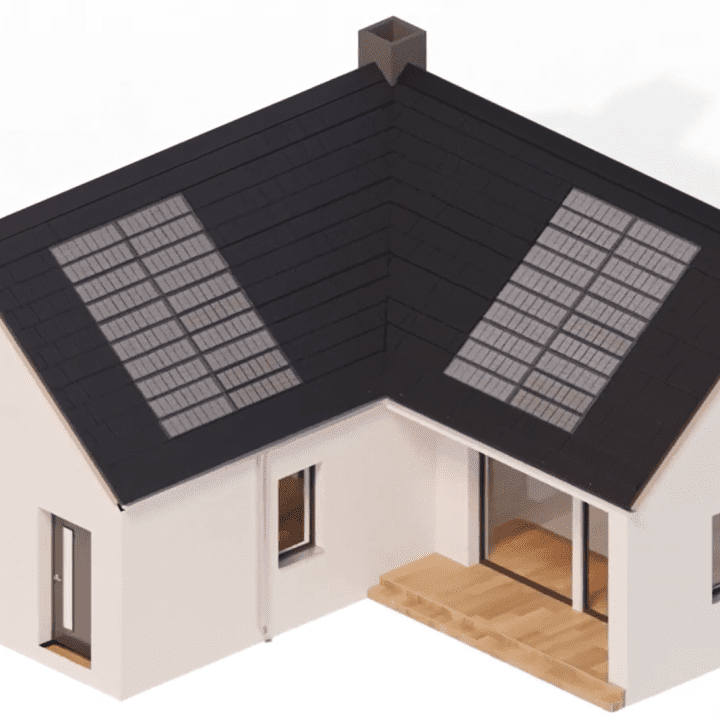
On an on-roof system, the panels are placed on top of the roof, which typically has a layer of roof tiles. These roof tiles act as a fire barrier. With in-roof systems, the tiles are replaced by the solar roof panels themselves, meaning there’s no physical barrier between the fire and the building’s interior. This is why the substructure of in-roof solar systems must be just as fire-resistant as a traditional roof with tiles.
Solving the Fire Safety Challenge
So, how does Solinso address this? We’ve got you covered.
1 Mystiek Products
Mystiek Products: Our Mystiek solar roof tiles are made from materials that don’t contribute to the spread of fire. They act as a fire barrier, just like a traditional roof tile. This ensures that your solar roof not only performs well but also helps protect your home in case of a fire.
2 Roof Construction
Roof Construction: It’s not just the solar tiles that matter; the entire roof structure must be fire-resistant. We adhere to the EN13501 standard, which is the European fire classification system for building materials. This standard categorizes materials into seven different fire classes, from A (non-flammable) to F (extremely flammable or untested).
Each fire class also has three important subcategories:
- Smoke Development (s1 = low, s2 = average, s3 = strong)
- Flammable Droplets (d0 = none, d1 = limited, d2 = high)
- Acidity of Combustion Gases (a0 = none, a1 = limited, a2 = high)
3 Fire-Resistant Materials
Fire-Resistant Materials: For Mystiek installations, we recommend using C-s1, d1, a1 or better rated electrical cables. Additionally, the entire roof structure (including insulation) should be rated B-s1,d0 or better. This means that materials like mineral wool and glass wool insulation always meet the necessary fire safety requirements. If your insulation is made of materials like Styrofoam or bio-based materials, we recommend using flame-retardant A- or B-class foils for extra protection.
Want to Know More?
Visit Downloads for all the specifics.