

World Population & Energy
The world’s population is growing rapidly, and with it our demand for energy. Over the past 75 years, the number of people has risen from 2.5 to 8 billion. Thanks to medical advances and better technology, we are living longer and more comfortably, but that also means we need more energy — for food, heat, transport and everyday life.
More and more households and businesses are using technology that consumes energy, such as cooling, heating, and electrical appliances. This growth highlights the importance of sustainable energy sources that can meet our future energy needs.

Fossil Fuels & Dependency
Most of the energy we use today still comes from coal, oil and gas. This makes us dependent on fossil fuels and the countries that supply them. Global energy consumption has risen dramatically in recent decades, with major consequences for the environment and the economy.
Historical events such as the 1973 oil crisis show how vulnerable we are without alternative energy sources. Sustainable solutions are therefore not only good for the climate, but also for our energy security.
Energy Policy & History
Dependence on fossil fuels led to awareness about energy and the environment as early as the 1960s and 1970s. Reports on climate change followed, and the establishment of the IPCC in 1990 marked the beginning of global attention to sustainability.
Today, we see that energy transition is not a new idea, but an increasingly urgent challenge. Policy measures and technological advances play a crucial role in this.
The Sun as a Solution
Fortunately, the sun offers an abundant and clean source of energy. One hour of sunlight reaching the Earth contains enough energy to power the entire world for a year. With the right technology, we can sustainably meet a large part of our energy needs.
Solar energy helps reduce dependence on fossil fuels and accelerates the energy transition. Moreover, it is a flexible solution that can be applied to the roofs of homes, offices and businesses.
Solar Energy Innovations
The technology behind solarpanels is developing rapidly. Over the past 10 years, the prices of solar panels have fallen by around 70%, while the efficiency of modern panels now stands at between 20–25%.
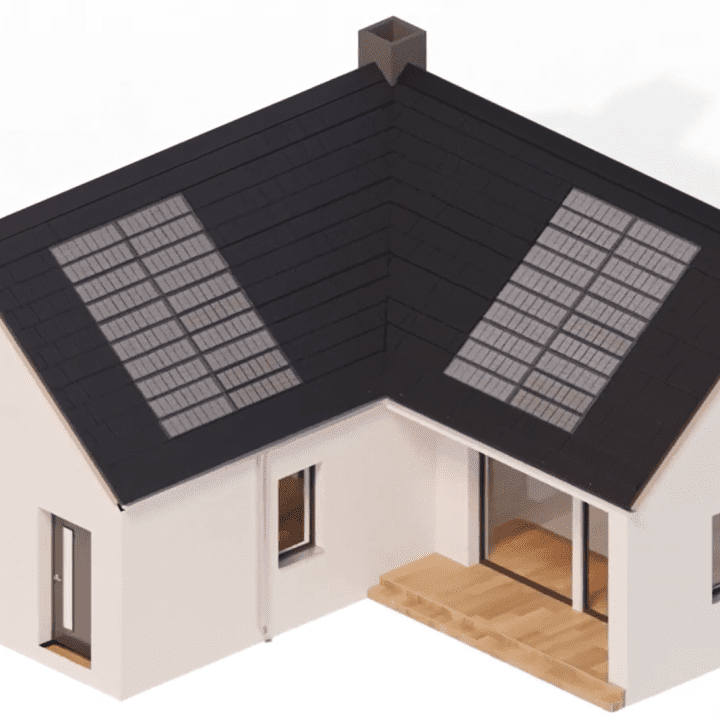
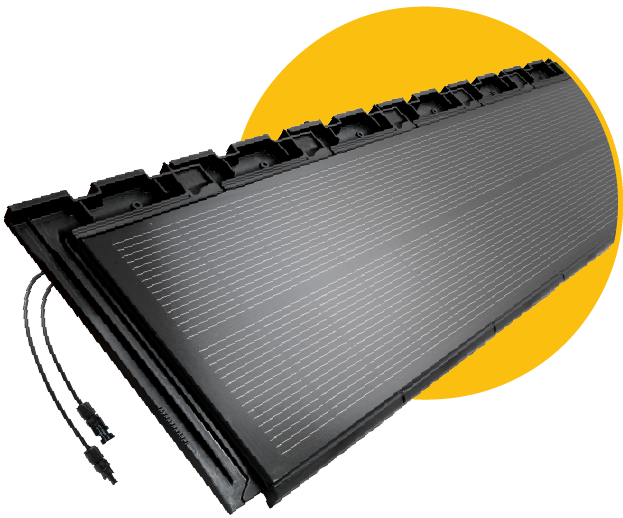
Innovations such as integrated solar roof tiles make solar energy aesthetically appealing and easy to install. This makes it financially attractive for more and more households and businesses to invest in sustainable energy.
EV & PV - the Combo for Homes
Electric driving and solar panels are a powerful combination. An average household with 10 solar panels can generate enough electricity each year to power an electric car for 15,000–20,000 kilometres.
Generating solar energy at home reduces energy bills and makes households independent of fossil fuels. It shows that everyone can play an active role in the energy transition.
Our Solinso-approach
At Solinso, we demonstrate how innovation works in practice. With our integrated solar roof tiles (BIPV), we combine aesthetics, efficiency and social relevance. From the initial design to the final installation, we help to combine aesthetics with sustainable energy.
Our work proves that solar energy is not only theoretically feasible, but also directly applicable and scalable in the Dutch market. In this way, we make the energy transition concrete, visible and accessible to everyone.

Powering a Sustainable Future
The energy transition is both achievable and essential. Solar energy provides an abundant, clean, and cost-effective solution to our growing energy needs.
By investing in technologies such as integrated solar roof tiles and electric mobility, we can reduce our dependence on fossil fuels and contribute to a more sustainable future. It is now up to businesses, households, and policymakers to seize these opportunities and shape the energy future together.