

What do all those sustainability abbreviations and energy terms actually mean?
When you read about sustainable construction or solar energy, you are bombarded with abbreviations. MPG, CSRD, BENG, EPD… they sound complicated, but they all boil down to one thing: better construction for people and the environment. Below, we help you navigate the alphabet of green construction terms and abbreviations.
Big Goals & Policies
SDG – Sustainable Development Goals
The 17 sustainability goals of the United Nations. They cover everything from clean energy and fair work to climate action and responsible production. Many companies (including in the construction industry) use the SDGs as a compass.
CSRD – Corporate Sustainability Reporting Directive
European legislation that requires large companies to be transparent about their sustainability policies, impact and plans. This includes reporting on CO₂ emissions, energy consumption and material choices. This makes sustainability more measurable and comparable.
CBAM – Carbon Border Adjustment Mechanism
A European CO₂ levy on products originating outside the EU, such as steel or cement. This prevents environmentally harmful production from relocating to countries with less stringent regulations.
Environmental Performance & Lifecycle
LCA – Life Cycle Assessment
A method for calculating the environmental impact of a product or building, from raw materials to demolition. This tells you exactly how much energy, raw materials and emissions are involved.
C2G – Cradle to Grave
Literally: from cradle to grave. An LCA covering the entire life cycle, from production to waste disposal.
C2C – Cradle to Cradle
The opposite of ‘grave’: designing so that materials can be reused indefinitely without losing their value. An important principle in circular construction.
EPD – Environmental Product Declaration
A kind of passport for construction products. Based on an LCA, it states the environmental impact of a product, expressed in clear figures.
EPDB – Energy Performance of Buildings Directive
European directive that determines how energy efficient buildings must be. The Dutch BENG requirements are based on this.
Construction & Energyperformance
MKI – Environmental cost indicator
Convert the total environmental impact of a construction product into euros. This allows you to compare different materials or designs fairly in terms of sustainability.
MPG – Environmental Performance Buildings
Indicates how environmentally harmful the materials in a building are. The lower the score, the more sustainable the design. New construction projects must comply with a maximum MPG.
BENG – Nearly Energy Neutral Building
The standard for energy-efficient new buildings in the Netherlands. A building must be designed in such a way that it generates almost as much sustainable energy as it consumes.
EEF – Embodied Energy Flow
Embodied Energy Flow is a concept that measures the total energy required for a product’s entire life cycle, from raw material extraction to production, transportation, use, and disposal.
* For international readers, the MKI/MPG is irrelevant.
Instead, EPD will be the relevant end product of an LCA.
Circular Economy & Data Sources
CE – Conformité Européenne
ECF –Embodied Carbon Flow
This refers to the total greenhouse gas emissions associated with a product’s entire lifecycle, from raw material extraction and manufacturing to use and disposal. It is measured in kilograms of carbon dioxide equivalents (𝑘𝑔𝐶𝑂2𝑒) and is a critical metric for assessing the climate impact of construction materials.
CS3D – Corpporate Sustainabillity Due Dilligence Directive
the CS3D is a comprehensive policy that requires in-scope companies to address sustainability risks and negative impacts throughout their business activities.
NMD – Nationale Milieudatabase
A Dutch database containing thousands of construction products with their environmental data. Used in calculations for MPG and MKI.
Solar Energy & Building Integration
PV – Photovoltaic
The technology that directly converts sunlight into electricity. This includes all solar cells, panels and roof tiles.
BAPV – Building Applied Photovoltaics
Solar panels that are installed on a building, for example on top of an existing roof or façade.
BIPV – Building Integrated Photovoltaics
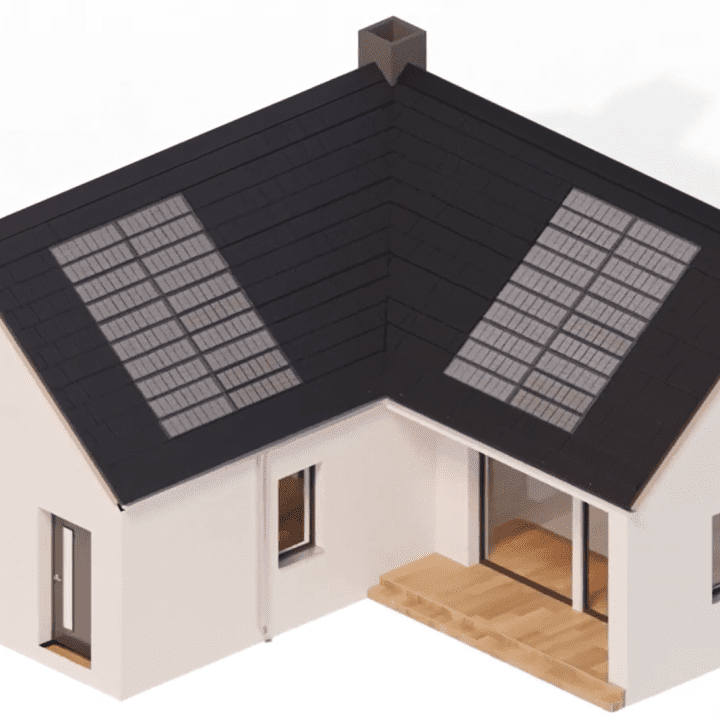
Solar panels that are integrated into the building, such as solar roof tiles that are actually part of the roof structure.
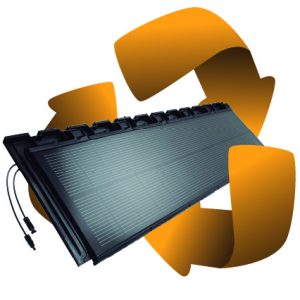
At Solinso, we call this the Mystiek solar roof tile — aesthetic, functional and fully integrated.
VEL – Improved Energy Label
To improve your energy label, you need to make your home more energy efficient. An improved energy label is not only good for the environment and your energy bill, but can also increase your mortgage and the value of your home.
Why these abbreviations matters
All these abbreviations help to make sustainability measurable. They ensure that we don’t just talk about ‘green building’, but can also prove it. Whether you’re looking at a solar panel, a facing brick or an entire roof, behind every product is an environmental score that tells you how friendly it is to the planet.
If you would like us to expand this article with more environmental abbreviations or construction abbreviations, please let us know what abbreviations you are looking for.