

Why this is becoming increasingly important in construction?
The construction sector is making every effort to work more sustainably. Governments, contractors and manufacturers are increasingly required to meet environmental performance requirements. An important tool for measuring the environmental impact of materials and projects is the Environmental Cost Indicator (MKI). This indicator makes it possible to compare different solutions fairly on the basis of their environmental impact. At Solinso, we believe it is important that our products contribute to a lower environmental impact and are a good option for the construction of the future.
Read the article about environmental abbreviations in construction

What does MKI exactly mean?
The Environmental Cost Indicator (MKI) expresses the environmental damage caused by a product, material or project in euros. The lower the MKI value, the more sustainable the solution. The MKI not only looks at CO₂ emissions, but also at other environmental impacts such as raw material consumption, air pollution, waste and energy consumption.
By combining all environmental impacts into a single figure (the ‘shadow price’), it becomes easier to compare products and projects. An MKI score therefore reflects what it would cost to fully repair the environmental damage caused by a product.
MKI and the construction sector
The MKI was developed for civil engineering, but is now also increasingly being used in residential and non-residential construction. The MKI value is playing an increasingly important role in tenders, especially for projects by the Department of Public Works and Municipalities and local authorities.
A concrete example: suppose two buildings are being designed. Building A costs 1 million euros with 5 tonnes of environmental costs, and building B costs 1.1 million euros with 3 tonnes of environmental costs. The total social cost is therefore 1.5 million and 1.4 million respectively. The second building is therefore more sustainable and socially beneficial, despite the higher construction costs.
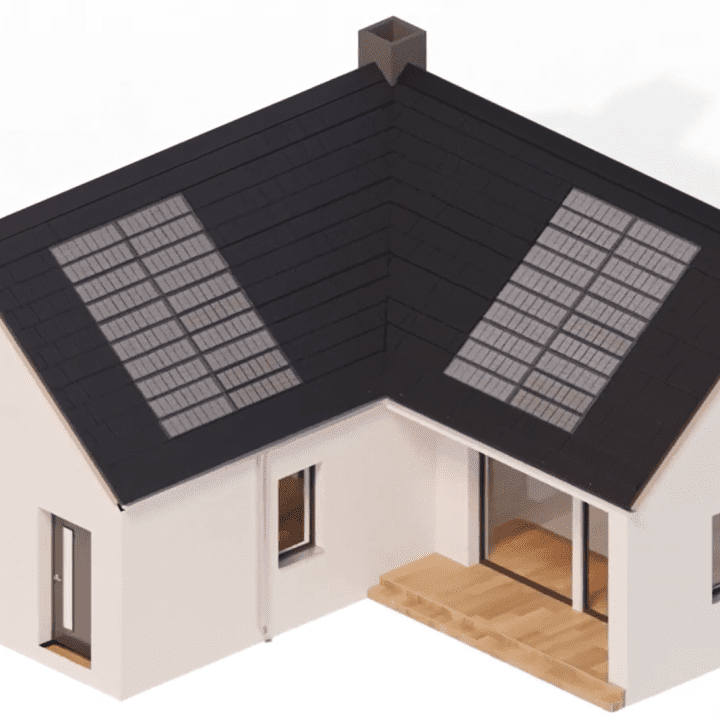
roof or façade with a low MKI score helps to achieve sustainability goals, such as circular construction and CO₂ reduction.
How is the MKI calculated?
To calculate the MKI value, an LCA (Life Cycle Analysis) is performed. This is a comprehensive environmental assessment covering the entire life cycle of a product, from raw material extraction to waste disposal. The steps are as follows:
-
Data collection
Information about raw materials, production processes and energy use. -
Perform LCA
The environmental impact of the product is calculated per life stage. -
Drawing up an environmental profile
The results are summarised in an overview of impact categories, such as CO₂ emissions, water consumption and resource depletion. -
Calculate shadow price
All securities are converted to euros using fixed conversion factors. The total results in the MKI score.
The connection between MKI & MPG
In the construction sector, there is also frequent discussion of the Environmental Performance of Buildings (MPG). Both concepts are related:
- De MKI is a score for infrastructure and products, expressed in euro/unit of use .(e.g., € 10 / kg cement)
- De MPG translates this to a building level, expressed in euro/m² per year.
Both methods use the same LCA principles and data from the NMD (Dutch National Environmental Database). This creates a clear basis for sustainable choices in the construction chain.

Why MKI is important for sustainable choices
The MKI makes sustainability concrete and measurable. It helps clients, contractors and manufacturers to:
- Comparing materials objectively.
- Assessing the financial value of sustainable innovations.
- Making environmental gains visible in projects.
- To comply with requirements for sustainable procurement and the Building Environment Decree (BBL).
The lower the MKI, the better the score in tenders and the smaller the ecological footprint.