

Why is LCA so important in construction?
Sustainable construction requires insight. Not only into what you are doing today, but also into the impact of a product throughout its entire life cycle. A Life Cycle Assessment (LCA) provides that insight. This method allows you to measure the total environmental impact of a product, from raw materials to the waste phase. For Solinso, the LCA is an important tool for understanding and reducing the environmental impact of our products.
Read the article about environmental abbreviations in construction

What does LCA exactly mean?
An Life Cycle Assessment is a scientifically based method to calculate the environmental impact of products and processes. All phases of the life cycle are taken into account:
- Raw material extraction and production
- Transport and construction phase
- Usage and maintenance
- End-of-life (recycling or waste processing)
The results are expressed in measurable environmental impacts, such as CO₂ emissions, energy consumption, depletion of raw materials and water pollution. An LCA reveals where in the life cycle the greatest environmental impact occurs. This helps companies to become more sustainable in a more targeted way and to improve their products.
How does an LCA work?
ISO 14040/44 specifies how an LCA process should be conducted. In the Netherlands, the Method for Determining the Environmental Performance of Buildings is used, as applied in the National Environmental Database (NMD).
The analysis consists of four phases:
- Goal & Scope - Define exactly what is being studied: a product, process, or building. This also sets the system boundaries (for example, “cradle to grave” or “cradle to gate”).
- Inventory Analysis (LCI) - Collect all relevant data on materials, energy, transport, and emissions. This step forms the basis for the calculations.
- Impact Assessment (LCIA) - Calculate environmental impacts, divided into categories such as climate change, acidification, particulate matter formation, and resource depletion.
- Interpretation- Analyze the results to identify opportunities for improvement. For example: could a material be replaced with a more sustainable alternative?
LCA in practice
In construction, a Life Cycle Assessment is used to quantify the environmental performance of products and projects. The LCA results are stored in the Dutch National Environmental Database (NMD) and can be used to calculate:
These Dutch indicators are based on LCA results, similar in concept to an EPD (Environmental Product Declaration) used internationally for products. Using LCA allows architects, contractors, and clients to make objective, fact-based decisions rather than relying on assumptions.
LCA provides insight into
- Transparency
- Areas for improvement
- Policy value

& the Role of LCA
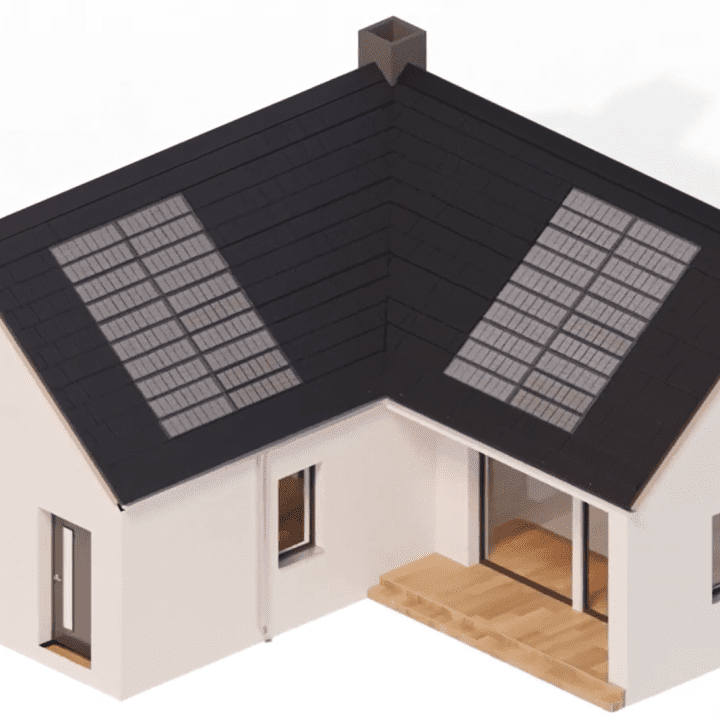
At Solinso, we use LCA to continuously improve the environmental impact of our products. The Solinso solar roof tile combines aesthetics and solar energy in a single building product, which yields immediate benefits in a life cycle analysis:
- Less materials by integrating roofing and solar panels.
- Longer service life by sustainable components.
- Lower maintenance needs during life time.
- Possibilities for reuse and recycling after end of life.
By having our products tested via an LCA, we can demonstrate that our solutions not only generate energy, but also contribute to a lower environmental impact in every phase of their life cycle.

LCA can make the Difference
A Life Cycle Assessment makes sustainability measurable and comparable. It provides insight into the actual environmental impact of products, processes and buildings. For Solinso, the LCA is an important tool for optimising our products, improving environmental performance and contributing to a future in which every roof not only generates energy, but also spare the environment.